

Boeing’s Risky Demolition 2026
"I am very concerned that residents nearby are in harm's way," says Larry Yee, former Chair of the Los Angeles Regional Water Quality Control Board.
-
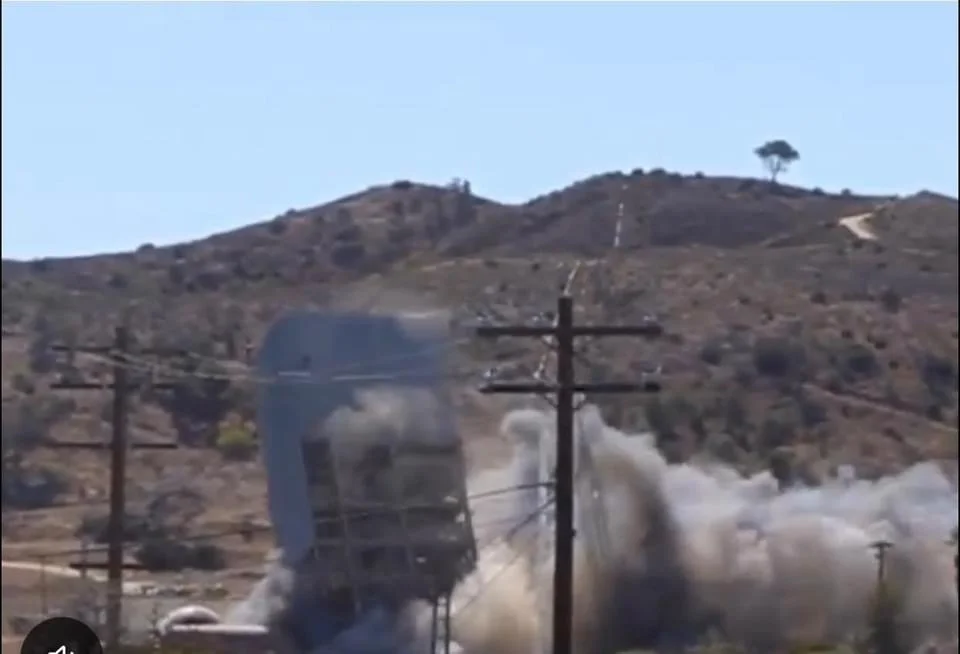
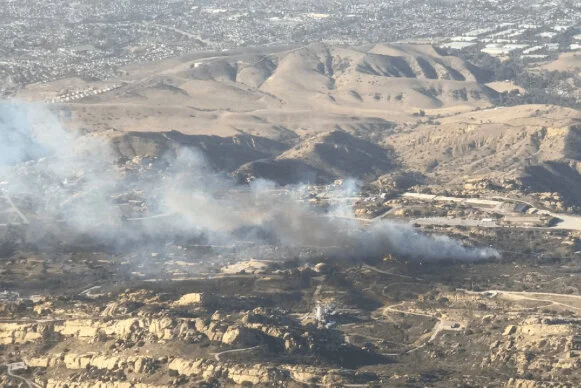
Boeing is demolishing five buildings at the Santa Susana Field Lab (SSFL) that were used for radioactive work, including a plutonium fuel facility.
-
The buildings have been decommissioned are “legally “non-radioactive, but this was based on outdate technology, obsolete rulings, and questionable studies.
-
Plutonium-239 has a 24,000 year half life and a 500,000 year hazardous life. Breathing trace amounts can cause cancer. It is one of the most dangerous substances on earth.
-
It has already begun. We have been told that 1 building is gone and a 2nd is in progress. We don’t know which buildings they were yet.
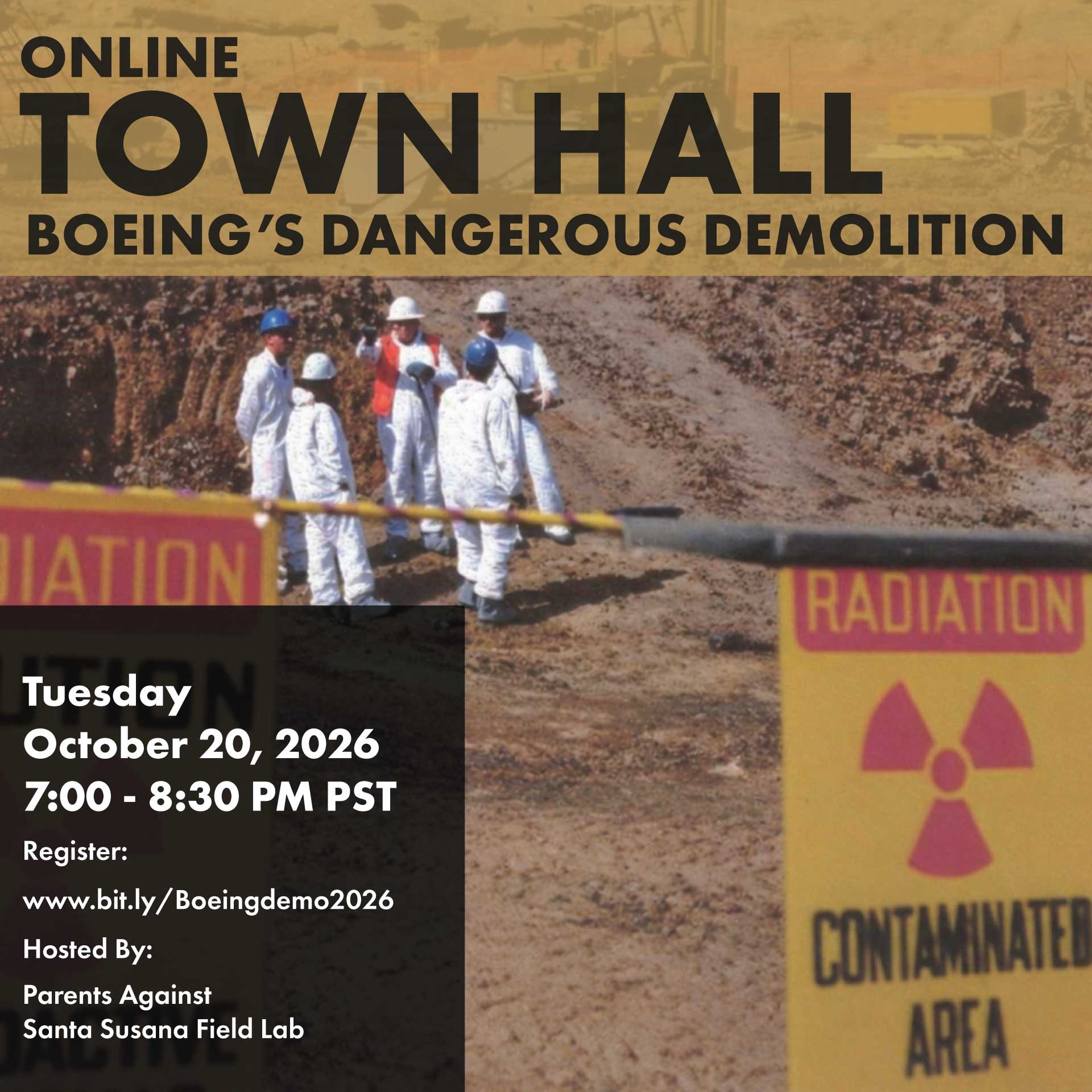
Virtual Town Hall
Tuesday, October 20, 2026
7:00 - 8:30 PM PST
Please join us for a critical update webinar about Boeing’s dangerous demolition at the Santa Susana Field Lab. We will share what Boeing is doing, what we can do about it, how to protect yourself and your family, plus Q&A.
This webinar is free and open the public. Please share with friends and family who live within 10 miles of the site. Use the public post from Parents vs SSFL to share: https://bit.ly/4yyLSRA

What can I do?

Contact your elected officials and ask them to get involved.

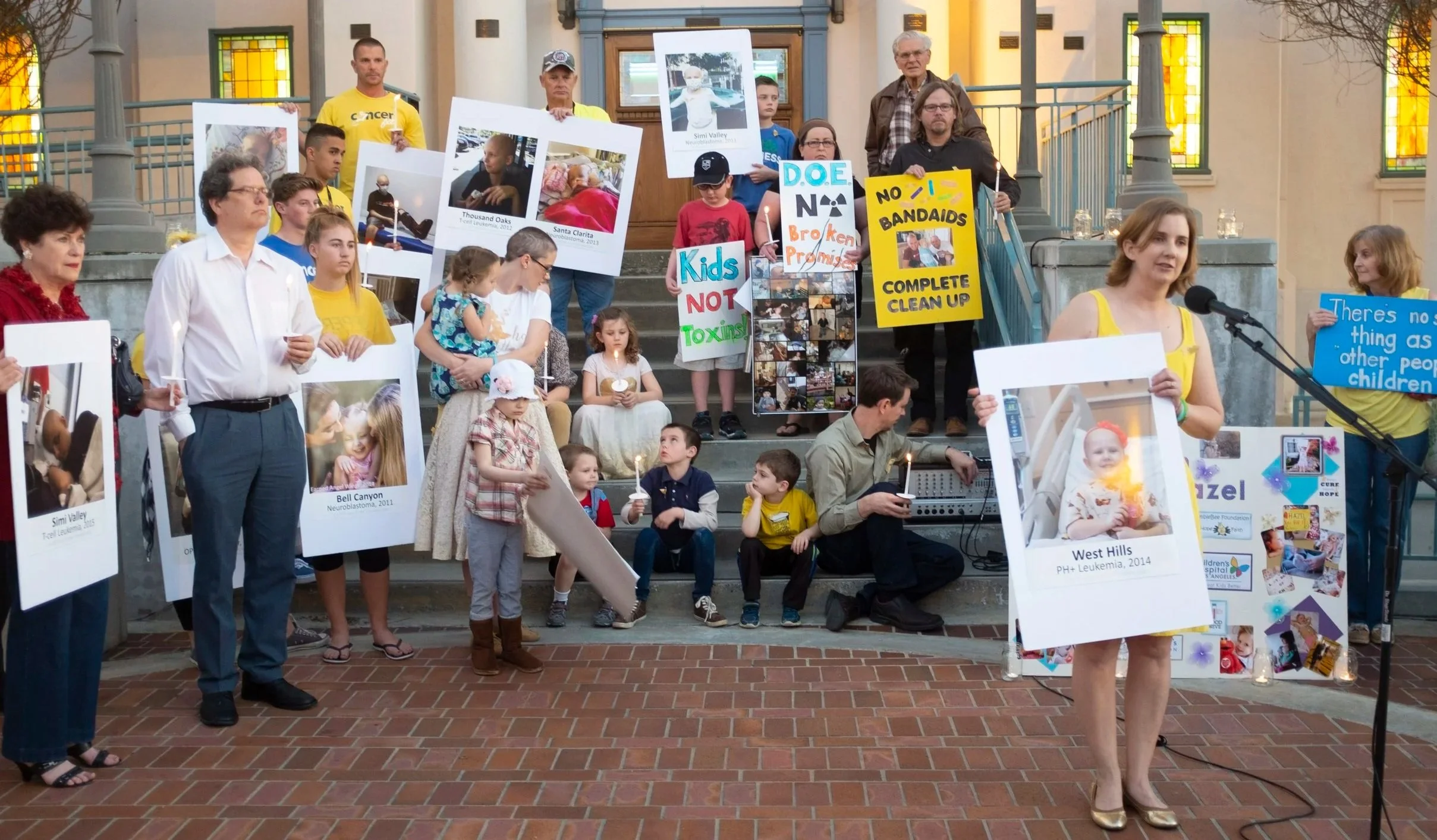
Pass out flyers in your neighborhood
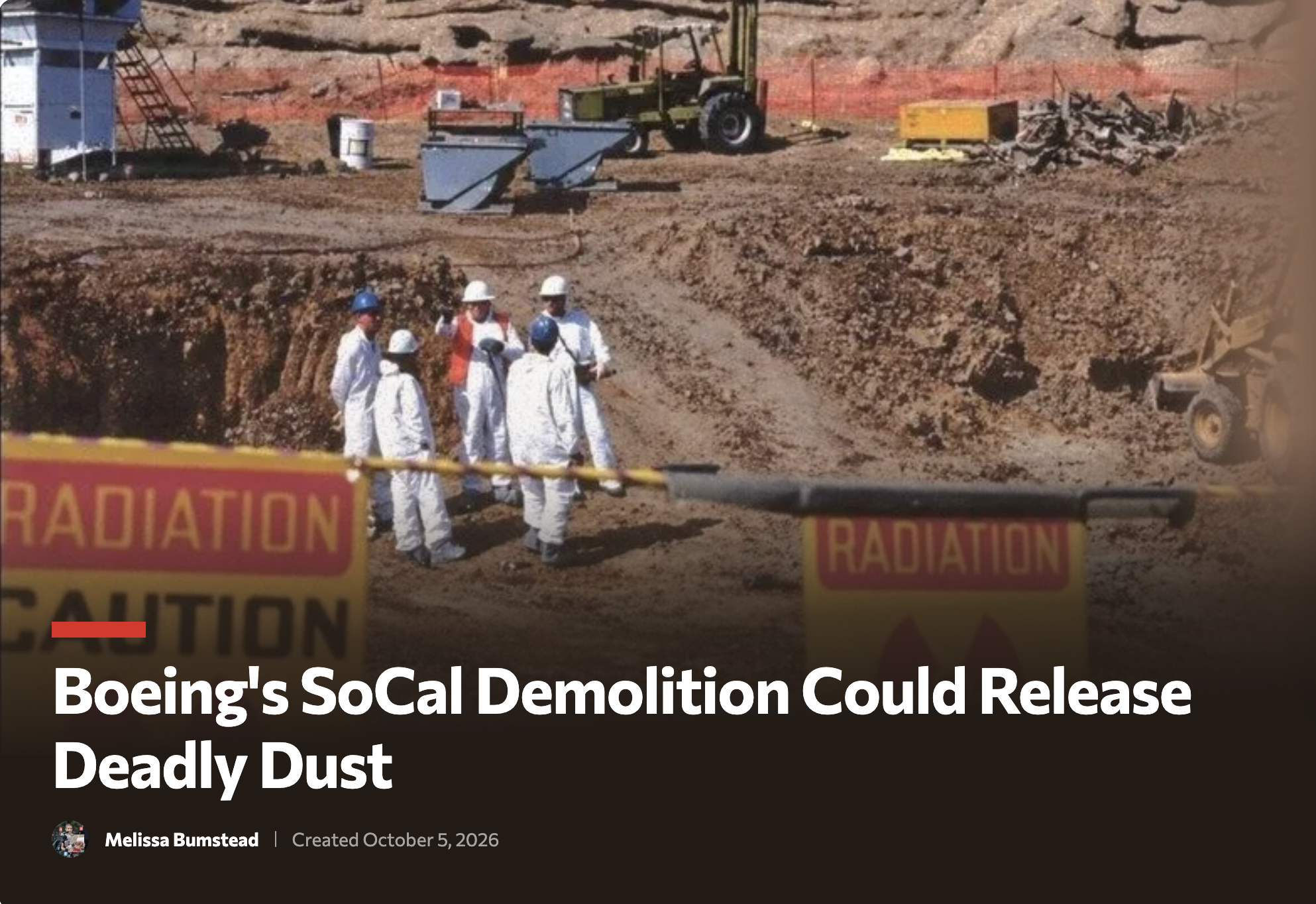
Sign and share our change.org petition
Sign up for our email newsletters
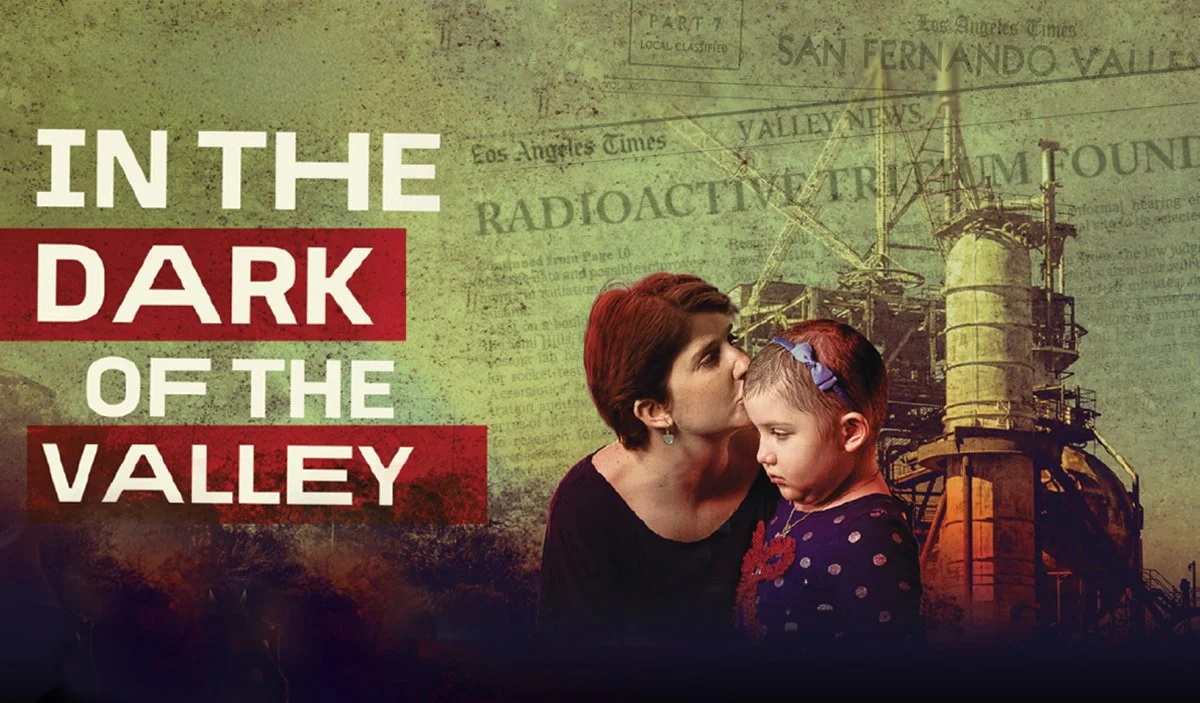
Watch the Emmy-nominated documentary for free and share
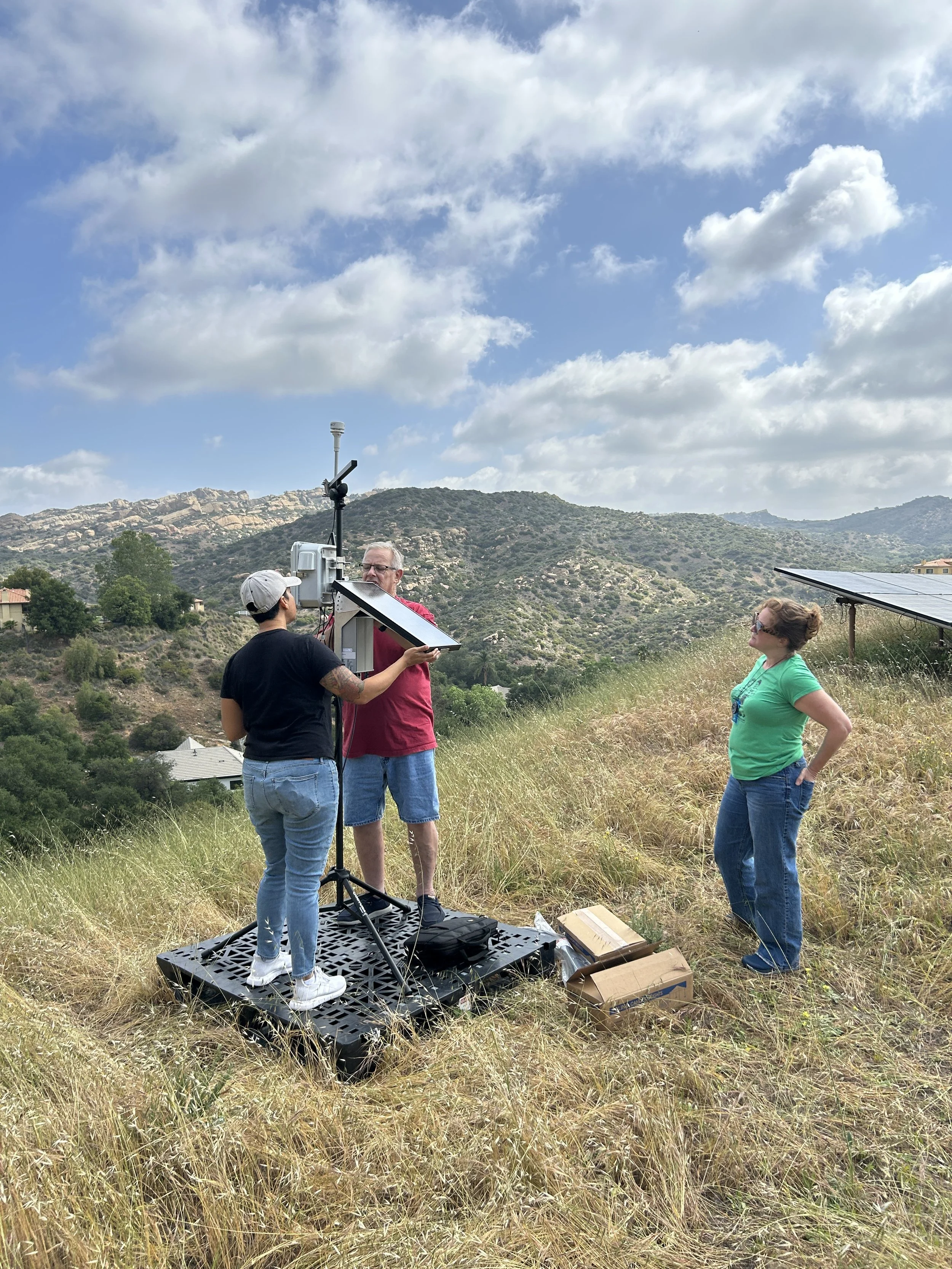
Donate to help us buy independent air monitors around the site
Area IV Buildings
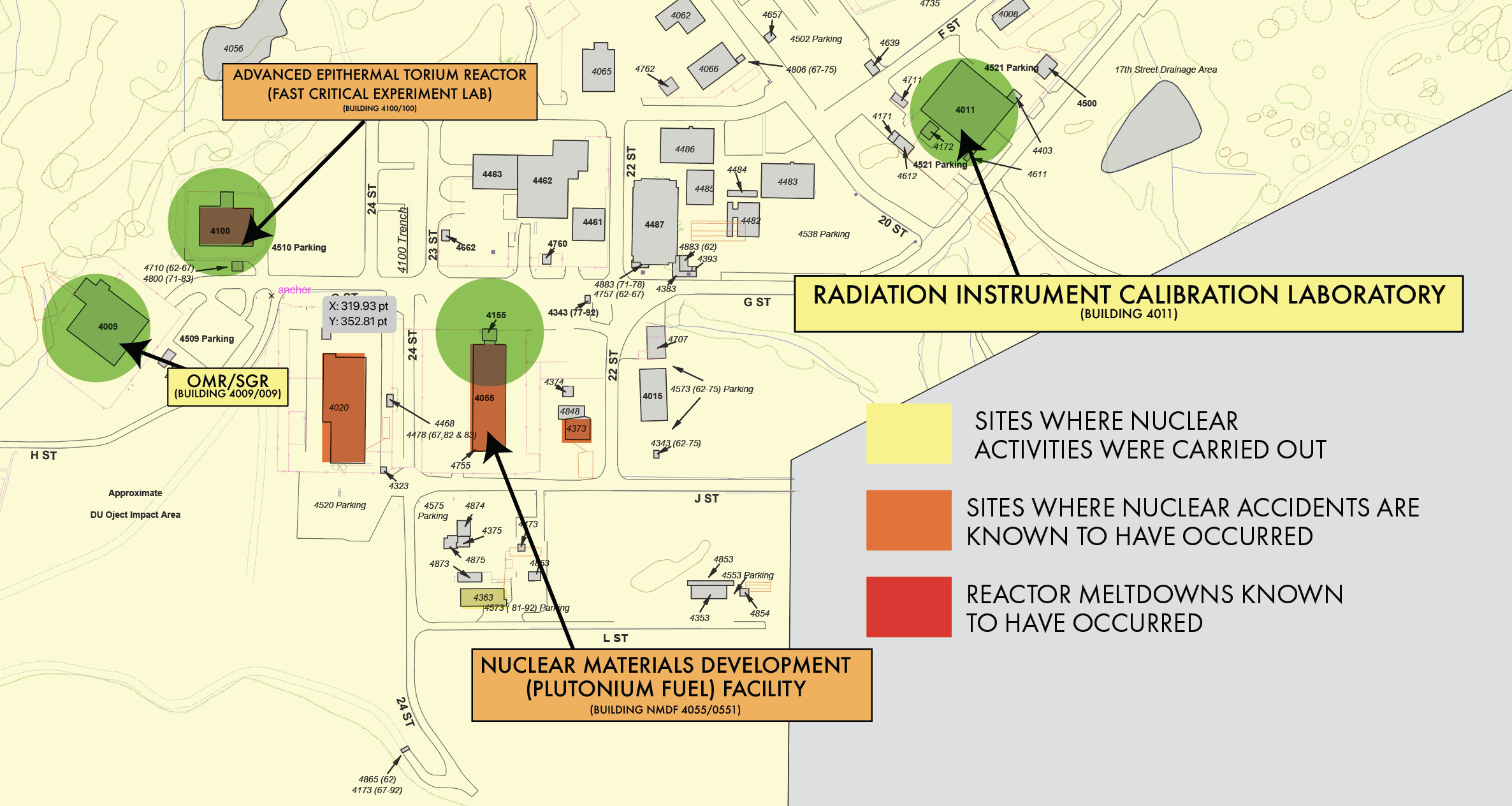
Boeing’s five remaining buildings at the Santa Susana Field Lab (Area IV) were used for radiological work. Several had nuclear accidents, including the former plutonium fuel facility. In the 1980s, the buildings were tested using questionable methods, now-outdated equipment, and obsolete regulations. Despite the limitations, readings above naturally occurring “background” radiation levels were observed, including 88 exceedances at the plutonium fuel facility alone. In other words, the buildings tested radioactive.
The exceedances were ruled “Acceptable Surface Contamination Levels,” according to 1974 Atomic Energy Commission (the agency no longer exists) standards. Boeing’s buildings were officially decommissioned before the rest of site was even known to be extensively contaminated with radiation — and Boeing may have walked away from all future cleanup except for Gregg Dempsey, Director Monitoring and Analytical Services for the EPA. The EPA demanded a new site-wide soil study, instead of just the buildings, resulting in a multi-year radiation soil survey. The newer study found hundreds of locations of elevated radioactivity, despite Boeing’s claims of having cleaned the site up twice before.
Regardless, Boeing’s remaining five buildings are still legally considered “abandoned warehouses” today. A court ruling in 2023 determined that the Department of Toxic Substances Control (DTSC), who oversees the cleanup of the SSFL, and the Department of Health, will not have any oversight of Boeing’s demolition or the disposal of the debris from the five buildings.
Parents Against SSFL (PASSFL) is concerned that, without independent oversight, Boeing will not implement adequate safeguards to prevent radioactive material from reaching nearby communities through demolition dust — potentially polluting our air and water. We are concerned about worker safety. And we’re concerned that if plutonium-239 is not properly disposed of, it may poison generations of people for 500,000 years.
This isn’t the only time Boeing has tried to get away with this. In 2013, despite evidence of other Area IV buildings being low-level radioactive, Boeing sent thousands of tons of potentially low-level radioactive debris to recyclers and less protective (and less expensive) landfills that were not created to protect the public from radiation. (2013 Committee to Bridge the Gap: Demolition of Radioactive Structures and the Disposal and Recycling of the Debris from the SSFL)
After multiple requests for more information, Boeing has told us that they will follow the legal requirements for demolishing and disposing of their Area IV “abandoned warehouses,” but refuse to acknowledge any risks of exposing the public to radioactive material.
PASSFL, independent experts, and residents are fighting back because we know that just because it’s legal, it doesn’t mean it’s safe.
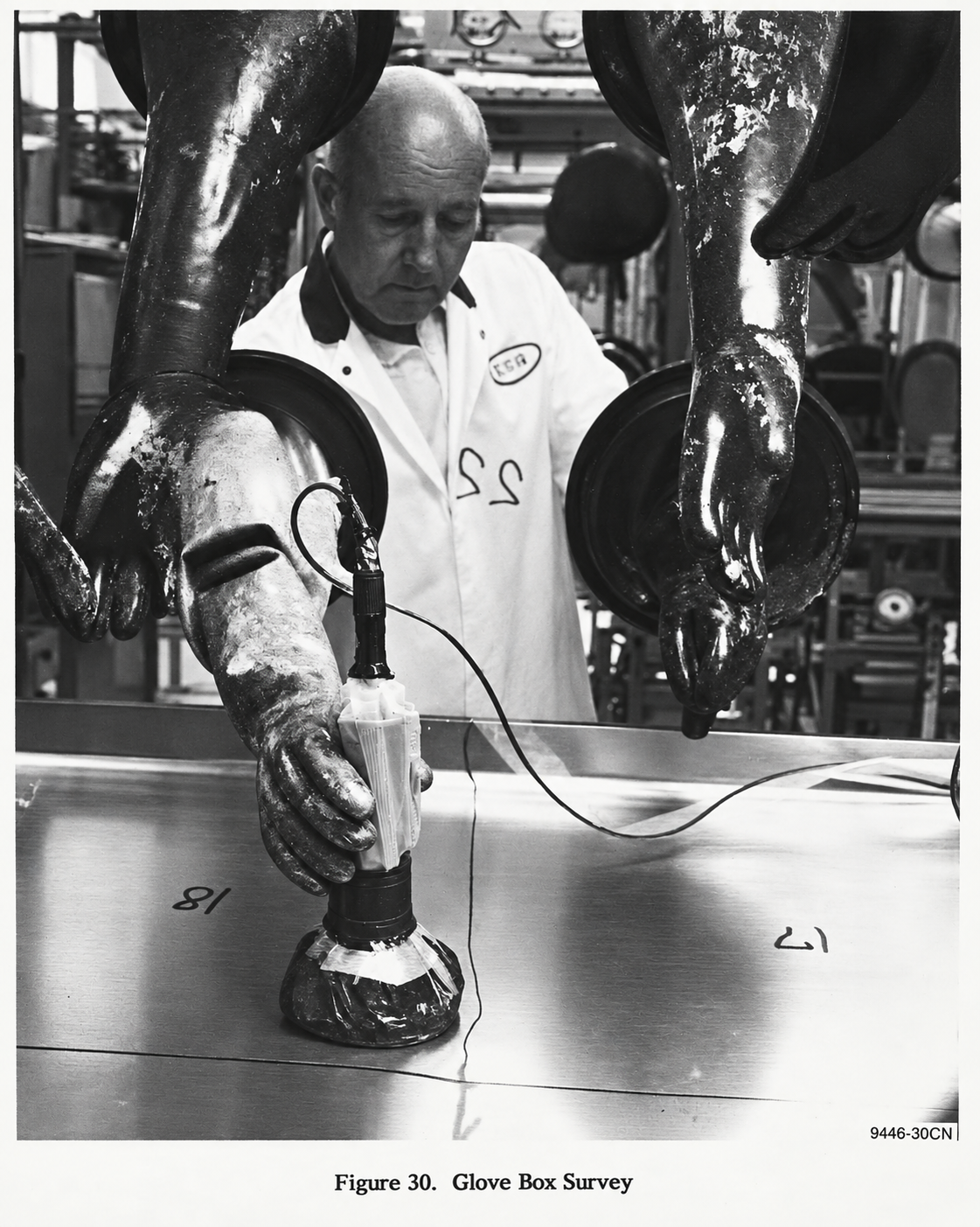
"A few millionths of an ounce of plutonium-239, if inhaled, will result in cancer with a virtual 100% statistical certainty."
The Hazard from Plutonium Dispersal by Nuclear-warhead Accidents, by Steve Fetter and Frank R. von Hippel, in Science and Global Security, Vol. 2, No. 1 (1990), pp. 21–41. (0.08 micrograms = ~3 millionths of an ounce).
in order to protect the public, Boeing should:
PROVE THE BUILDINGS ARE NO LONGER RADIOACTIVE
Best practices for testing
Background levels to be determined using EPA or offsite calculations.
Alpha spectrometry to identify alpha-specific radionuclides
Wipes or smear testing and scanning methods are not sufficient alone
Volumetric samples to be used, not just surface
Radiological testing should be done before and after demolition
Split samples to be shared with community
Independent monitor should be allowed to watch samplers for adhering to best practices
Results should be shared in a transparent and timely manner, including all lab records, data, and analysis
Use modern standards to determine safety levels
Current EPA PRG calculator for an exposure pathway including with Resident Air PRGs, using appropriate exposure duration and frequency.
-or - USE THE SAFEST DEMOLITION AND DISPOSAL METHODS FOR RADIOACTIVE MATERIAL
“Gold Standard” Dust Mitigation Methods
Construction tent with HEPA filter to be used over areas with active demolition
Tarp areas during nights and weekends to prevent dust
Lower wind thresholds to stop work
Radiological Continuous Air Monitors
Results should be shared in a transparent and timely manner, including all lab records, data, and analysis.
Worker radiological safety PPE
Improved transportation methods
Better covering for trucks
Ensuring material can’t be tracked offsite from construction vehicles and equipment
Treat all debris as low-level radioactive waste
All debris to low-level rad landfills only,
“Non-hazardous” waste
Green waste
Wattles and rainwater barriers post demolition
No debris recycling of any kind
Faulty studies
The studies used to decommission Boeing’s Area IV buildings were done poorly for even what they knew then, and possibly on purpose.
The 1986 EPA test for all five buildings was conducted by Tetra Tech EC Inc., who recently reached a settlement for $97M for falsifying radiological testing studies at Hunter's Point.
The 1986 study used now outdated technology.
Poor testing methodology.
EPA’s Gregg Dempsey observed poor testing methods, such as washing plants before testing them, short reading times, and holding the instruments too far away to get accurate readings.
“Acceptable Surface Contamination Levels,” were set under Regulatory Guide 1.86 to decommission the Area IV buildings but these levels are no longer accepted by the NRC as protective.
DTSC staff were concerned about the building’s potential to cause harm in an internal memo.
EPA demanded a new site-wide soil study, instead of just the building studies, resulting in a multi-year radiation soil survey, released in December 2012. The newer study found hundreds of locations of elevated radioactivity, despite Boeing’s claims of having cleaned the site up twice before.
outdated standards:
Regulatory Guide 1.86: 1974 federal Atomic Energy Commission (the agency no longer exists) guidance containing surface-contamination release criteria. The U.S. Nuclear Regulatory Commission (NRC) withdrew Regulatory Guide 1.86 in 2016 because it relied on obsolete instrumentation thresholds and lacked a modern dose-pathway risk analysis.
DOE Order 5400.5: DOE radiation-protection standards, which also contained surface-contamination criteria. DOE canceled this regulation in 2011.
DECON-1: California DPH guidance concerning decontamination and release of facilities/equipment for unrestricted use. Not used as DPH policy since at least 2002.
IPM-88-2: California DPH policy memorandum concerning verification that facilities where radioactive materials had been used had been sufficiently decontaminated before release for uncontrolled use. Not used as DPH policy since at least 2002.
Current standards:
Radioactive History
Buildings in Area IV
Building 4009 Organic Moderated Reactor (OMR) Sodium Graphite Reactor (SGR)
In 1967, all equipment associated with the OMR and SGR was removed. The building continued to be used for storage and testing . In the late 1980s, the west high bay was used for high-energy rate forging (HERF) that utilized depleted uranium.
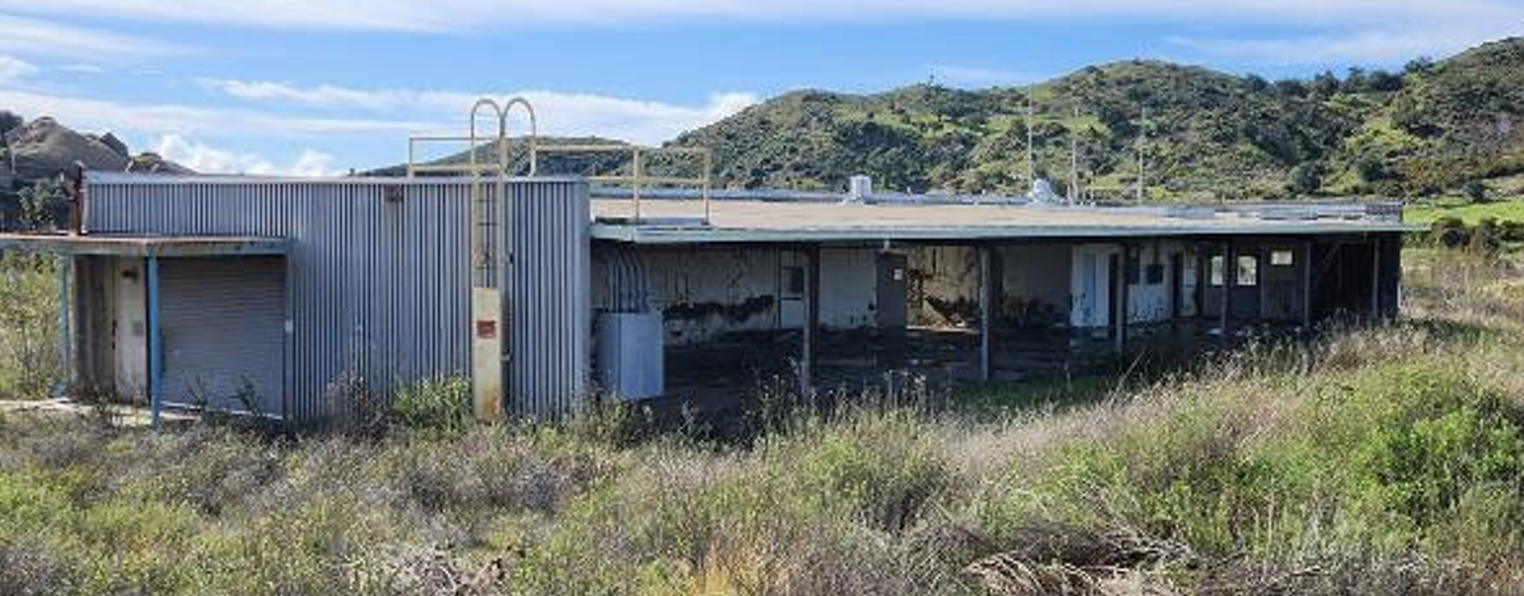
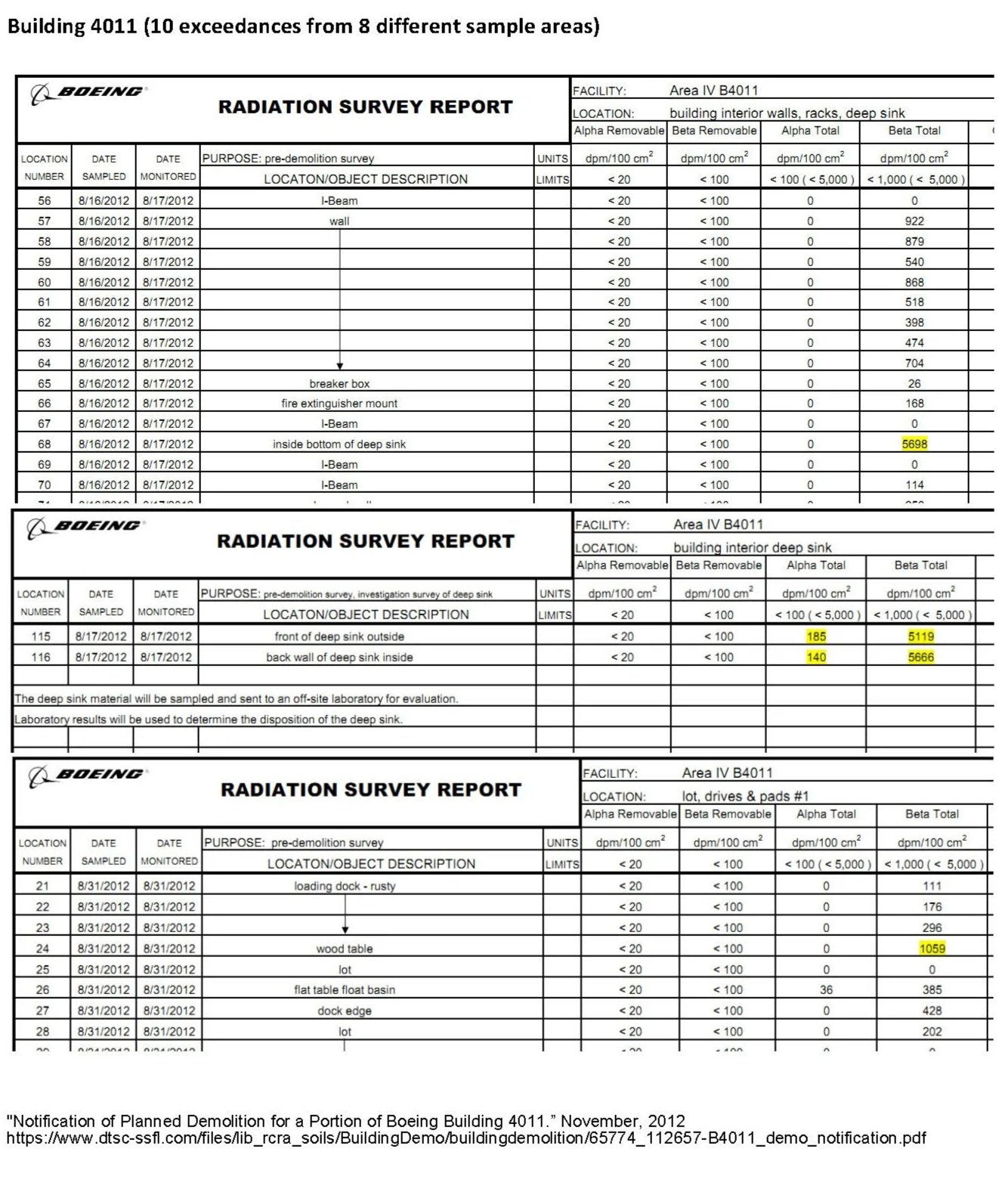
Building 4011: Radiation Instrument Calibration Lab
There were three Radiological Incidents that could have resulted in a release to the environment:
On April 28, 1960, to the west of the building, an Organic Moderated Reactor Experiment (OMRE) shipping cask leaked during a leak test and spilled radioactive liquid on the ground (mixed fission products) (A0531).
On April 13, 1985, a calibration source came loose from an actuator rod resulting in an exposure of Cs-137. A radiation survey indicated no contamination on any part of the rod (A0318).
On December 6, 1994, the 28 Ci Cs-137 calibration source dislocated from the release pull rod. A radiation survey indicated normal background levels in the source containment box and on the release pull rod (A0658).
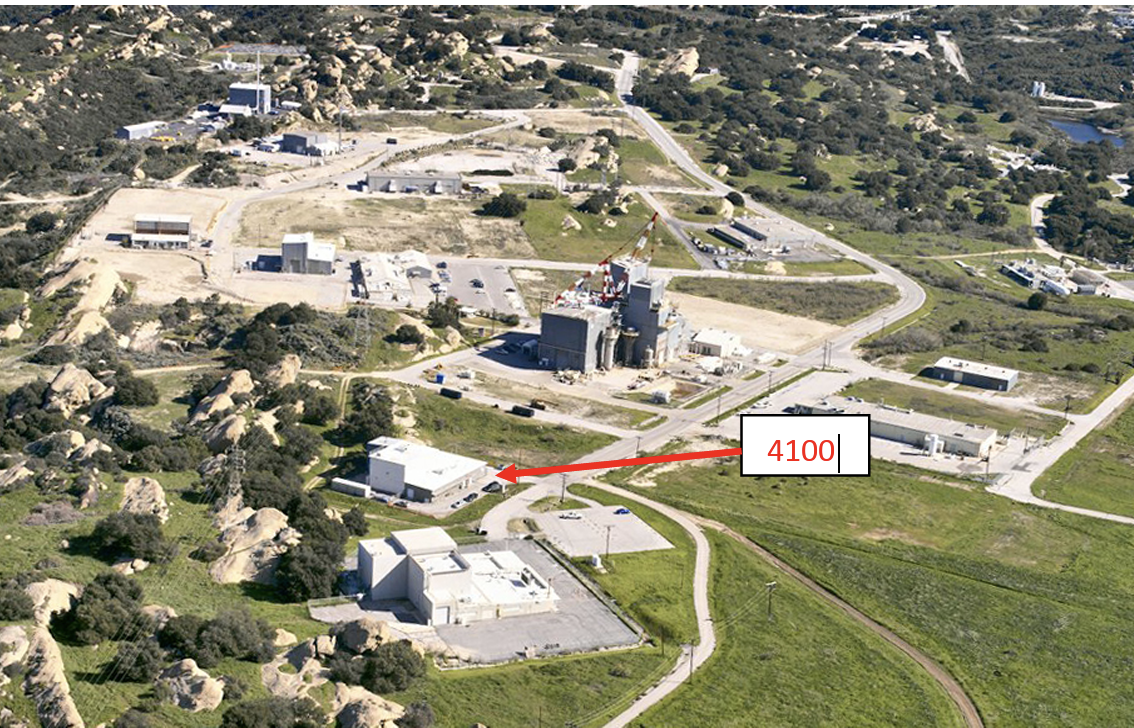
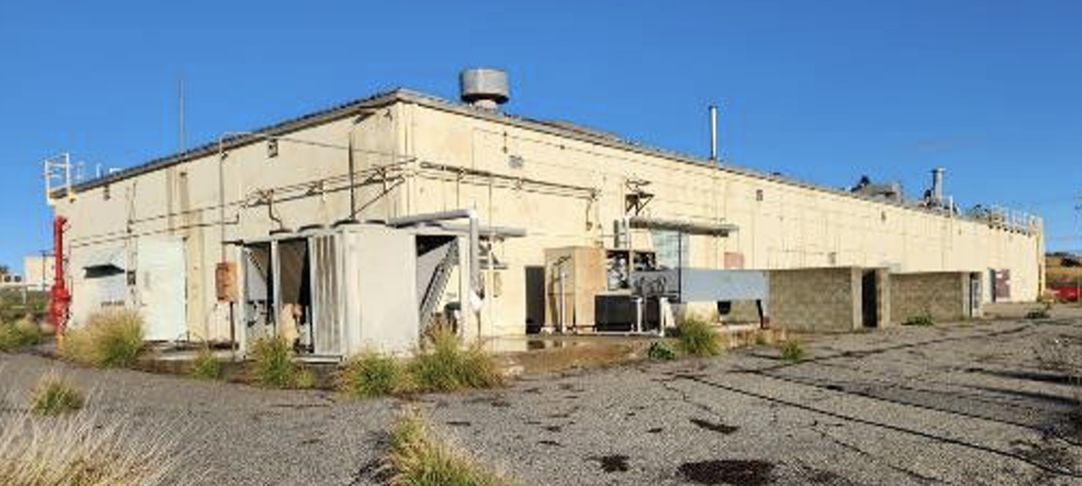
Building 4100: Advanced Epithermal Thorium Reactor (AETR); Fast Critical Experiment Laboratory (FCEL)
Nuclear Accidents are known to have occurred at building 4011
Information from Interviewees: “It did get ‘hot’ in that room, the radioactivity was mostly due to the Uranium-233.”
Buildings 4055 and 4155: Nuclear Materials Development (Plutonium Fuel) Facility
Nuclear Accidents are known to have occurred at building 4055
88 “above background” radioactive detections were observed in EPA study
According to a July 22, 1968, internal letter regarding the in-box filter systems at Building 4055, the high-efficiency in-box filter systems for the glove box trains that were involved in the mixed oxide and carbide programs had some deficiencies with regard to nuclear material recovery, accountability, and safety.
Two involving the release of plutonium into the glovebox room; one involving release of activity in the Process Lab.”
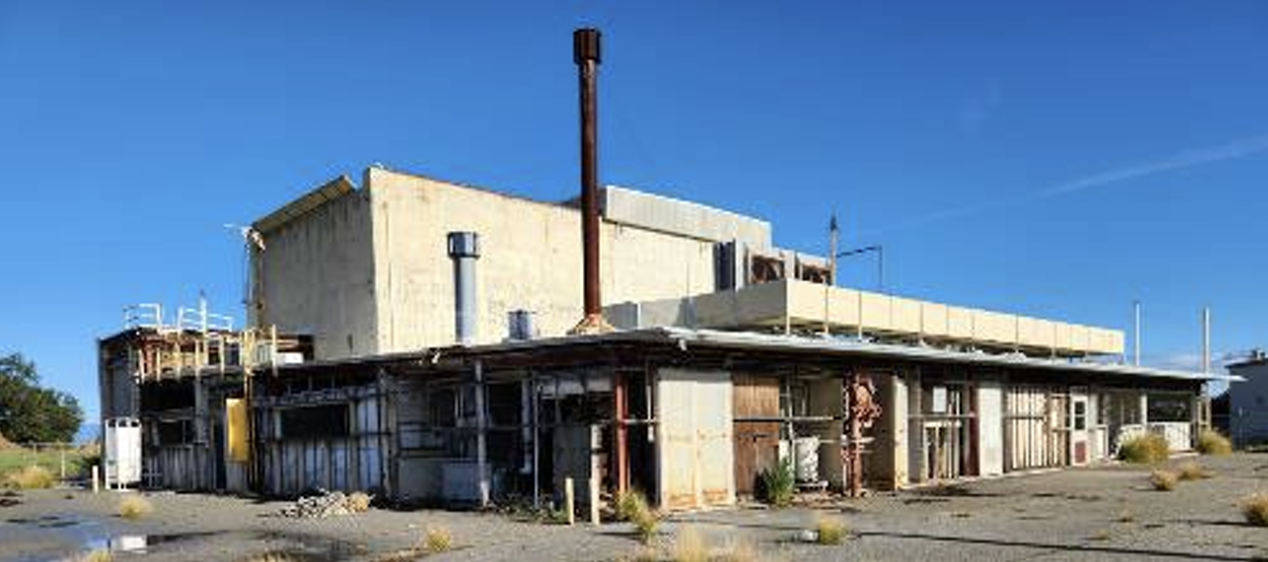
Lawsuits
In 2013, Committee to Bridge the Gap, Physicians for Social Responsibility - Los Angeles, and Consumer Watchdog sued the Department of Toxic Substances Control (DTSC) and Boeing over the Area IV Demolition of five radioactive buildings.
DTSC and Boeing won. Boeing will be allowed to demolish the buildings without additional radiological protections and without the oversight of the DTSC or the Department of Health.
Timeline:
2026 September DTSC mails out a Community Update announcing demolition
2026 August Boeing begins demolition (according to DTSC update)
025 December
2023 DTSC Final Programmatic Environmental Impact Report (PEIR)
2023 Judge sides with DTSC and Boeing over technical aspects of CEQA
2017 DTSC’s Draft EIR
2013 NGOs halt Boeing Demolition after improper radioactive waste disposal
2013 Release Criteria for Boeing Radiological Buildings in Area IV, Revision 0
2013 Boeing’s Revised Standard Operating Procedure (SOP) With Amendment 2
2012 Boeing informs DTSC that it plans to demolish buildings in Area IV without CEQA
2012 Boeing Notification of Planned Demolition for a Portion of Boeing Building 4011
2012 Boeing Notification of Demolition for Building 4011 Low Bay—Phase 2
2012: Boeing Attachment A: Work Scope Information for Removal of Buildings and Structures
2005 Sapere Consulting for DOE Historical Site Assessment
Historical assessment compiling Building 4009's operations, radioactive-material use, radiological surveys, remediation and release history.
2005 DOE Building 4055—Group X site summary
2003 U.S. EPA Independent assessment Building Survey Letter
2002 Tetra Tech/U.S. EPA One: Final Rocketdyne Technical Support and Field Oversight — Document Review for Buildings T009, T011, T019, T055, and T100
EPA/Tetra Tech technical review of the earlier Building 4011 radiological survey and release evidence.
2002 Tetra Tech/U.S. EPA Two: Final Oversight Verification and Confirmation Radiological Survey Report for Buildings T-011, T-019, T-055, and T-100
2001 EPA Gregg Dempsey: Letter to the SSFL Workgroup about his role in the Area IV radiological survey
1998 Boeing/Rocketdyne Building 4011 Final Survey Data Package
Final radiological characterization/survey used to demonstrate that Building 4011 satisfied applicable radiological release requirements.
1998 CA DHS/CDPH Verification survey / Final Survey Data Package
California's independent verification associated with the determination that Building 4011 could be released for unrestricted use.
1999 California DHS/CDPH Release for unrestricted use
Regulatory determination releasing Building 4009 for unrestricted use after reviewing the radiological survey results.
1988 Rockwell International Final radiological Survey of Building 4009
Radiological survey of Building 4009/T009 intended to identify areas requiring further investigation or radiological remediation.
1995 Rockwell International Building 009 Radiological Survey Data Package
Survey of the SGR high bay and roof performed as part of the radiological evaluation of Building 4009 before unrestricted release.
1995/1998 California DHS/CDPH Verification and Confirmatory survey
California DHS independently surveyed the OMR high bay in 1995 and the entire building in 1998 before concurring with release.
1997 EPA Gregg Dempsey: Letter 97RC1766 comments on the 1996 Area IV Radiological Characterization Survey.
1990 EPA Gregg Dempsey: Letter to Bill Watson, California Department of Health Services
1989 EPA Gregg Dempsey: Site Visit to Santa Susana Field Laboratory Operated by Rockwell/Rocketdyne
1989 EPA Gregg Dempsey: EPA Rocketdyne SSFL Site Sample Analysis Report concerns about prior testing
1987 Decommission Report Facility was released for unrestricted use and removed from the Special Nuclear Material License
1987 NRC Confirmatory Radiological Survey Nuclear Materials Development (FACKKY) Building 055
1986 Rockwell International Report, N704SRR990027, "Final Radiation Survey of the NMDF"
Research
Buildings Testing Insufficient: Building 4500
1986 EPA test conducted by Tetra Tech EC Inc (Reached a settlement for $97M for falsifying studies at Hunter's Point).
Testing methodologies insufficient
Used wipes which do not establish that the surface is free of alpha contamination. Does not get interior wall readings, only removable surface dust. 1986 "Final Radiation Survey of the NMDF" PDF page 6
Two of the surveys (ORNL, Tetra Tech) included gamma dose rates at 1meter above the surface in the building and surrounding area. Not alpha. 1987 ORNL Confirmatory Radiological Survey Nuclear Materials Development (FACKKY) Building 055 PDF page 10
“Background” readings used for the original studies were obtained from building 4055, “First, "natural background" was determined by measurements made in an area of the building which was known to be uncontaminated,” skewing the results to lower radiation readings. PDF page Pg 21
MARSSIM (joint consensus document of EPA, NRC, DOE, and DOD for radiological surveys): 4.5 Select Background Reference Areas: “Background reference areas are normally selected from non-impacted areas, but are not limited to natural areas undisturbed by human activities. In some situations, a reference area may be associated with the survey unit being evaluated, but cannot be potentially contaminated by site activities. For example, background measurements may be taken from core samples of a building or structure surface, pavement, or asphalt. This option should be discussed with the responsible regulatory agency during survey planning. Generally, reference areas should not be part of the survey unit being evaluated… selecting more than one reference area may be necessary.. If the background is not well defined at a site, and [if] the decision maker is willing to accept the increased probability of incorrectly failing to release a survey unit (Type II error), the reference area measurements can be eliminated and a one-sample statistical test performed as described in Section 8.3.
NUREG-1505 (NRC 1997a) 2.2.7 Reference Areas: “The distribution of background measurements in the reference area should be the same as that which would be expected in the survey unit if that survey unit had never been contaminated…“Any systematic difference in background level between the survey unit and the reference area will be indistinguishable from a difference in residual radioactivity in the two areas.”
“Acceptable Surface Contamination Levels,” under Regulatory Guide 1.86 to decommission the Area IV buildings. Only measured surface and not volumetric contamination.
Waste
Building debris from these buildings is subject to the “Governor’s Moratorium.” Executive Order D-62-02 (2002) states that decommissioned material from former radiological facilities that meets federal and state cleanup standards cannot be disposed of to Class 3 landfills or unclassified waste management units. PDF page 11
9.0. Demolition Waste Recycling: In compliance with Boeing company policy and Ventura County's 60% landfill diversion Ordinance 4357, for construction/demolition debris, demolition wastes are recycled whenever possible and practical. PDF page 15
9.2.1. During demolition, recoverable metal will be segregated from other demolition wastes and transported to a metal recycling facility. PDF page 15
9 .3 .1. Only non-hazardous concrete and asphalt will be designated for recycling. In compliance with Ventura County's Ordinance 4357, concrete and asphalt are designated for recycling whenever the material conforms to regulatory requirements, standard industry practices, and guidelines published by governmental agencies and trade organizations. PDF page 15
9.3.3. Concrete and asphalt waste that is determined to be non-hazardous may be transported off-site to a recycling facility or to a landfill that accepts Construction and Demolition (C&D) wastes. PDF page 15
10.0. Demolition Waste Disposal Facilities: 10.1. Non-hazardous non-liquid wastes that are not designated for recycling may be transported to Class 2 [higher risk non-hazardous waste] or Class 3 [municipal] landfills for disposal. Boeing may also elect to transport non-hazardous wastes to Class 1 disposal facilities when this is deemed to be warranted. PDF pg 16
Email from Paul Carpenter (DTSC) to Steve Fischer (Boeing), “SSFL Area IV Former Radiological Building Content Disposal,” February 13, 2013. “DTSC concurs that Class I landfill [hazardous waste] disposal of former radiological building contents is acceptable, and agrees that this method of disposal does not merit additional radiological screening.” PDF pg 26
Work Action Plan: Building 4100
The post-demolition debris from 4100 will be radiologically acceptable for off-site disposal and/or recycling. PDF page 225
The California Department of Public Health (CDPH) Radiologic Health Branch (RHB) has stated in a November 9, 2007 email to Phil Rutherford (Boeing) … “The Governor's Executive Order D-62-02, does not specifically require the Department of Health Services (now the Department of Public Health) to perform verification sampling of decommissioned material or to provide approval for disposal of specific decommissioned material shipped offsite (e.g., to Class I or II landfills). The California DPH has not imposed a requirement that Boeing or the Department of Energy (DOE) seek DPH verification sampling or approval of all decommissioned material destined for Class I or II landfills in compliance with the Governor's Executive Order.”PDF page 225
Foundation/Slab
Permit says no foundations to be removed; SOP says slabs will be removed. What is the difference?
Boeing’s Ventura County Permit
The demolition involves the removal of the above ground portions of the five Boeing-owned building structures. No foundations will be removed, and no subsurface work will be performed. PDF pg 3
The floor slabs and pavement will then be broken and removed. Based on this approach to demolition, near-surface soils will be exposed almost exclusively during the removal of floor slabs, spread footings, and concrete or asphalt surface paving. PDF page 16
14.1. Commingling of wastes will be reduced by avoiding disturbance of underlying soil any more than is necessary to remove the demolition project related material.
14.1.1. Building structures are removed initially throughout a target demolition site to avoid potential interaction with the subsurface soil. Foundations are removed last. PDF page 21
Radiological screening
Precautionary measures defined in Appendix A of the SOP have problems:
Use only old detection levels and methodology instead of current EPA defined levels.
Pu-239 detections which are primarily alpha emitters with a weak gamma signal.
Wipes will only detect direct surface contamination and not any potential interior wall radiation.
Detection methods listed don’t include alpha spectrometry needed to determine if the alpha detection is Pu-239. Individual radionuclides must be identified to use newer EPA PGA calculator.
" ... pre-demolition radiological screening procedures [of the SOP] meet or exceed regulatory and industry standards and that surface activity limits meet regulatory standards. Both the procedures and limits provide adequate assurance that fixed and removable radiological contaminants are not present in the pre-demolition materials." PDF page 23
Boeing commits to the following: Provide DTSC and CDPH with current updated versions of "Radiological Status of Boeing Buildings in Area IV…” SOP Rev 2 PDF page 26
8.5.1. As a precautionary measure, building structures, equipment, and materials, including road base, will undergo a pre-demolition radiation screening following the procedures outlined in Appendix A. PDF page 14
Appendix A: Radiation Screening Procedures for Non-radiological Buildings, Equipment and Debris
1.0. Building surfaces, equipment and/or debris (metal, concrete, asphalt, other) shall be screened using the following techniques:
Gamma radiation exposure rate shall be measured using a portable Ludlum Nal gamma detector or a Bicron microrem meter.
Total beta-gamma surface contamination levels shall be measured using a portable Ludlum G-M meter (or equivalent).
Removable alpha and beta surface contamination levels shall be taken using wipes and measured on a low-background Tennelec alpha/beta counter ( or equivalent).
2.0. Release criteria for surface contamination of building structures, material, equipment and debris shall be those specified in USNRC Regulatory Guide 1.86, USDOE Order 5400.5 Chapter IV, USDOE G 441.1-XX, and California Radiologic Health Branch guidance DECON-1 and IPM-88-2. Minimum detectable activities of instruments and wipes shall be less than these regulatory limits.
3.0. All measurements shall be recorded on a Boeing Radiation Survey Form 732-A, including results, instrument model and serial number, instrument calibration dates, instrument efficiencies, backgrounds, and minimum detectable activities. Tennelec alpha/beta counter output shall be attached to the Form 732-A. Photos and maps shall show the locations of measurements. Page 19
Regulations and Metrics used in Studies :
Regulatory Guide 1.86: 1974 federal Atomic Energy Commission (the agency no longer exists) guidance containing surface-contamination release criteria. The U.S. Nuclear Regulatory Commission (NRC) withdrew Regulatory Guide 1.86 in 2016 because it relied on obsolete instrumentation thresholds and lacked a modern dose-pathway risk analysis. Also, RG 1.86 was fundamentally a surface-contamination framework.
DOE Order 5400.5: DOE radiation-protection standards, which also contained surface-contamination criteria. DOE canceled this regulation in 2011.
DECON-1: California DPH guidance concerning decontamination and release of facilities/equipment for unrestricted use. Not used as DPH policy since at least 2002.
IPM-88-2: California DPH policy memorandum concerning verification that facilities where radioactive materials had been used had been sufficiently decontaminated before release for uncontrolled use. Not used as DPH policy since at least 2002.
Today’s Standards
NRC 10 CFR 20.1402, residual radioactivity must be low enough that the dose to an average member of the critical group does not exceed 25 mrem/year (0.25 mSv/year), and residual radioactivity must also be reduced ALARA (as low as reasonably achievable).
DCGL (Derived Concentration Guideline Level) corresponding to the applicable dose criterion and exposure scenario.
NRC's current decommissioning guidance includes building-surface screening values in dpm/100 cm². These values represent radionuclide concentrations calculated to comply with the 25-mrem/year unrestricted-release dose criterion, subject to assumptions and ALARA. NRC says that if contamination is below these screening values, a relatively simple facility may be able to demonstrate compliance without a full site-specific dose assessment.
That's why simply comparing 100 dpm/100 cm² from 1986 with a modern number without identifying the radionuclide and assumptions can be misleading.
For Building 4055, the old Annex B transuranic limit was:
Average: 100 dpm/100 cm²
Maximum: 300 dpm/100 cm²
Removable: 20 dpm/100 cm².
Modern dose/risk assessment is much more radionuclide-specific. NRC explains that its modern surface screening values are for individual radionuclides and that, where multiple radionuclides are present, a sum-of-fractions approach applies.
Current MARSSIM explicitly describes itself as a methodology for demonstrating compliance with dose- or risk-based requirements and covers the planning, characterization, remediation and final-status-survey process.

REFERENCES
2023 DTSC: Final Programmatic Environmental Impact Report (PEIR)
2017 DTSC: Draft Environmental Impact Report EIR
2018 CBG: Hunters Point Shipyard Cleanup Used Outdated and Grossly Non-Protective Cleanup Standards for comparison
2017 DTSC: Draft Environmental Impact Report EIR
2013 Boeing: Demolition Work Plan for Building 4100 (Area IV)
2013 CBG: Demolition of Radioactive Structures and the Disposal and Recycling of the Debris from the SSFL
2007 DOE’s environmental review for cleaning up Area IV was insufficient under NEPA
1986: Appendix 2 N704SRR990027, “Final Radiation Survey of the NMDF (Plutonium Fuel Facility)
1989 “Site Visit to Santa Susana Field Laboratory Operated by Rocketdyne,” by Gregg Dempsey, Chief, Field Studies Branch, Office of Radiation Programs, US EPA
(1) Saba, V. B., Rockwell Internal Letter to Radiation Protection and Health Physics Services, re: Radiological Safety Report, Contaminated Respirator Laboratory Washer, December 17, 1991.
A radiation survey of the OMR high bay and supporting rooms was performed in 1988. The grounds and drainlines were sampled in 1989. The SGR high bay and roof were surveyed in 1995. The California Department of Health Services (DHS) performed verification surveys of the OMR high bay in 1995 and the whole building in 1998. Based on the results of these surveys, the DHS released Building 4009 for unrestricted use in January 1999.