We’re running out of time
Santa Susana
Field Lab
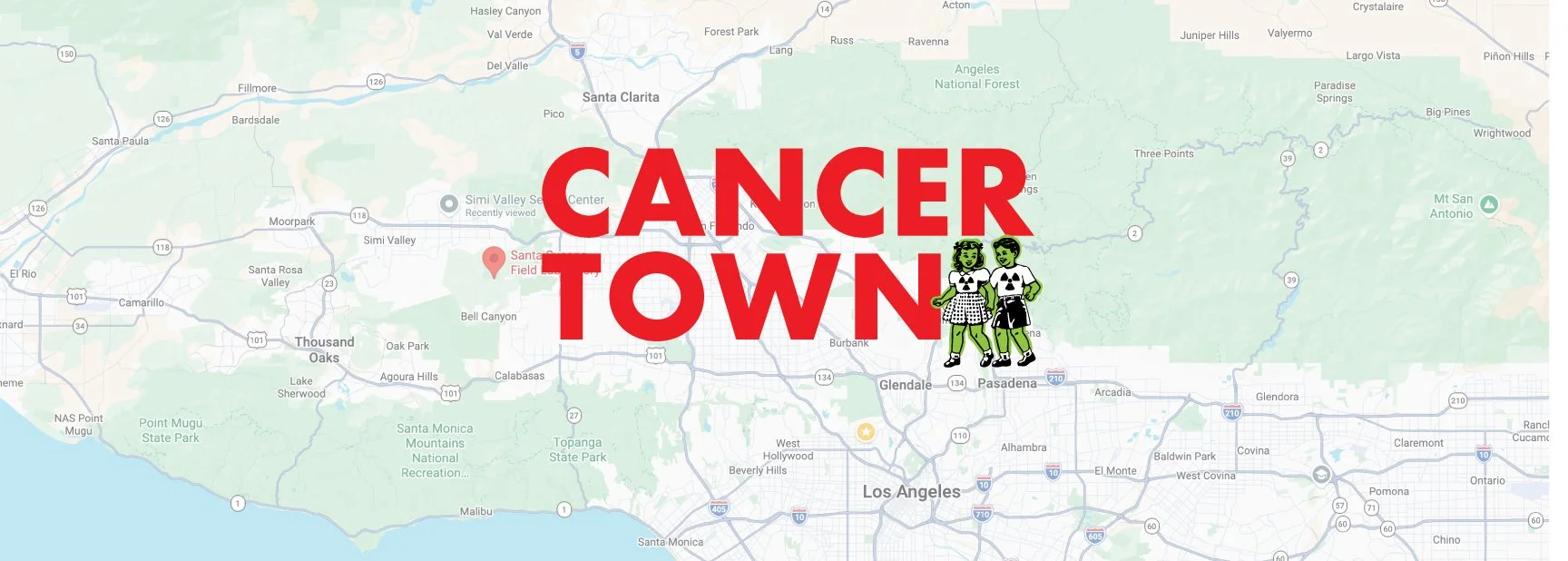
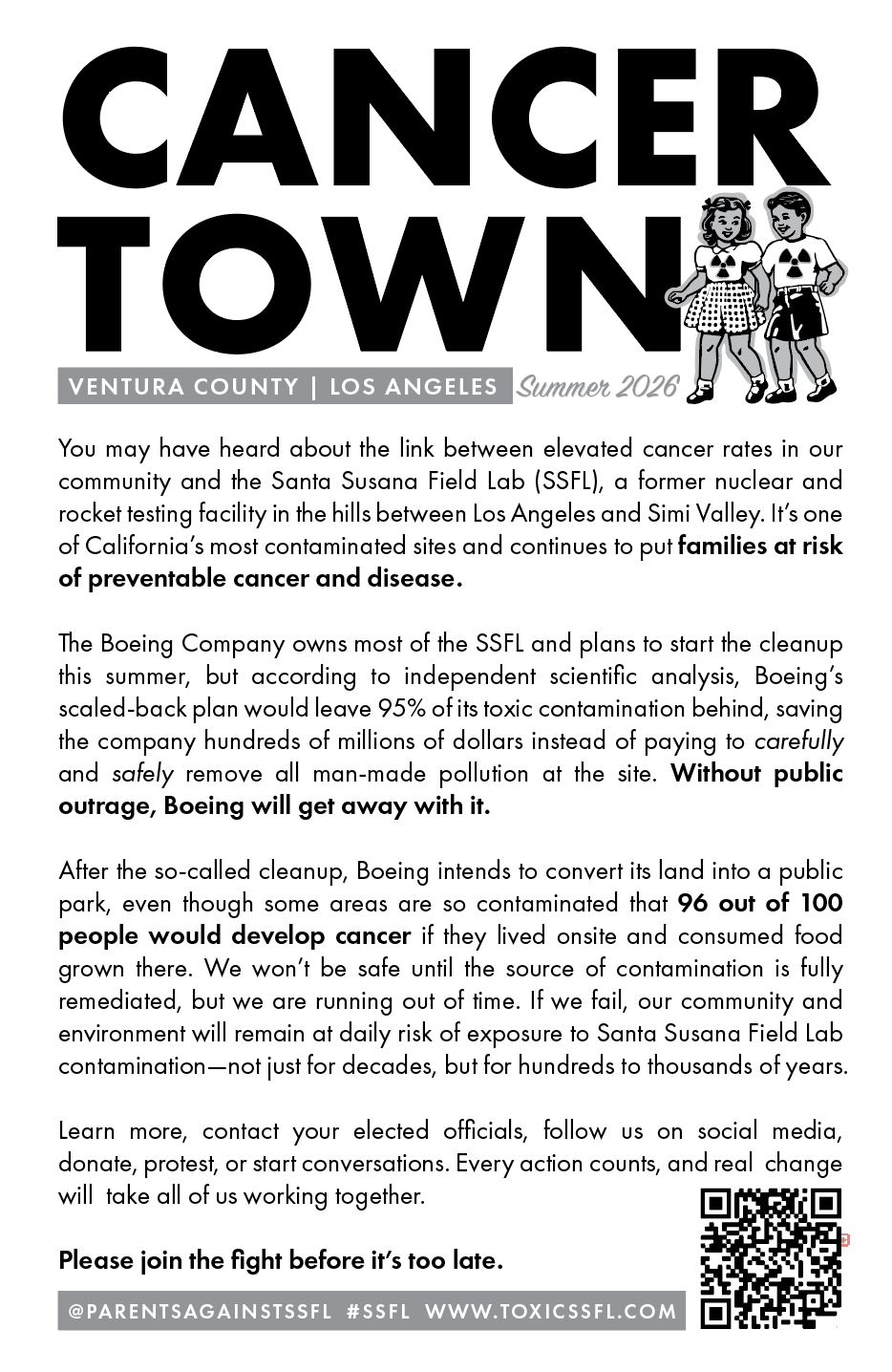
Cancer Town is about to become our permanent reality, starting this summer.
95% of Boeing’s contamination may remain onsite according to independent analysis.
85% of Boeing’s soil may be misclassified as non-hazardous and taken to Simi Landfill.
Potentially inadequate dust mitigation measures during excavation this summer could increase the risk of fugitive dust from the contaminated site.
All of this because the Boeing Company wants to save money instead of paying for a complete “Background” cleanup that would prioritize public health and protect our ecosystem.
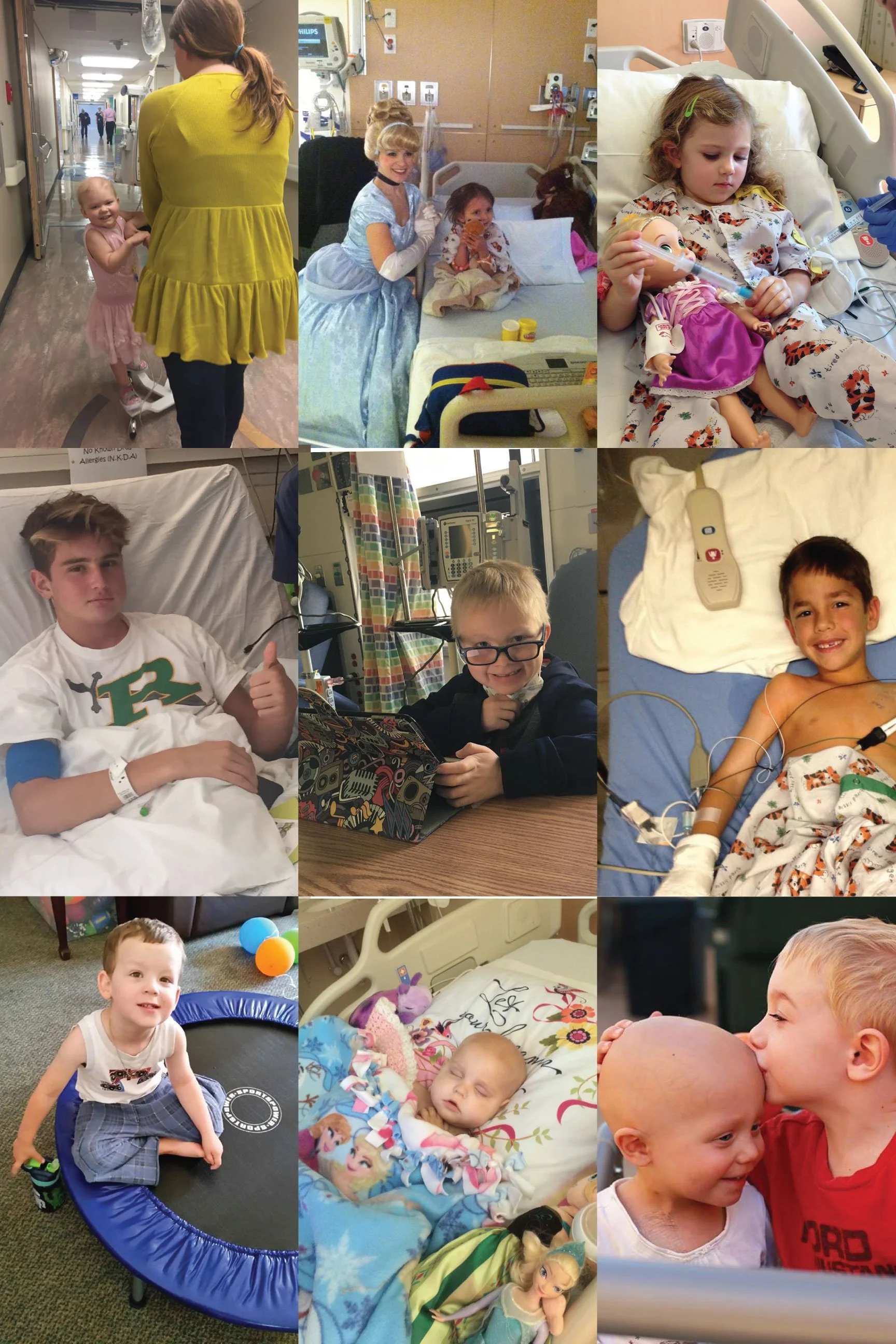
One of Calfornia’s most toxic and radioactive sites
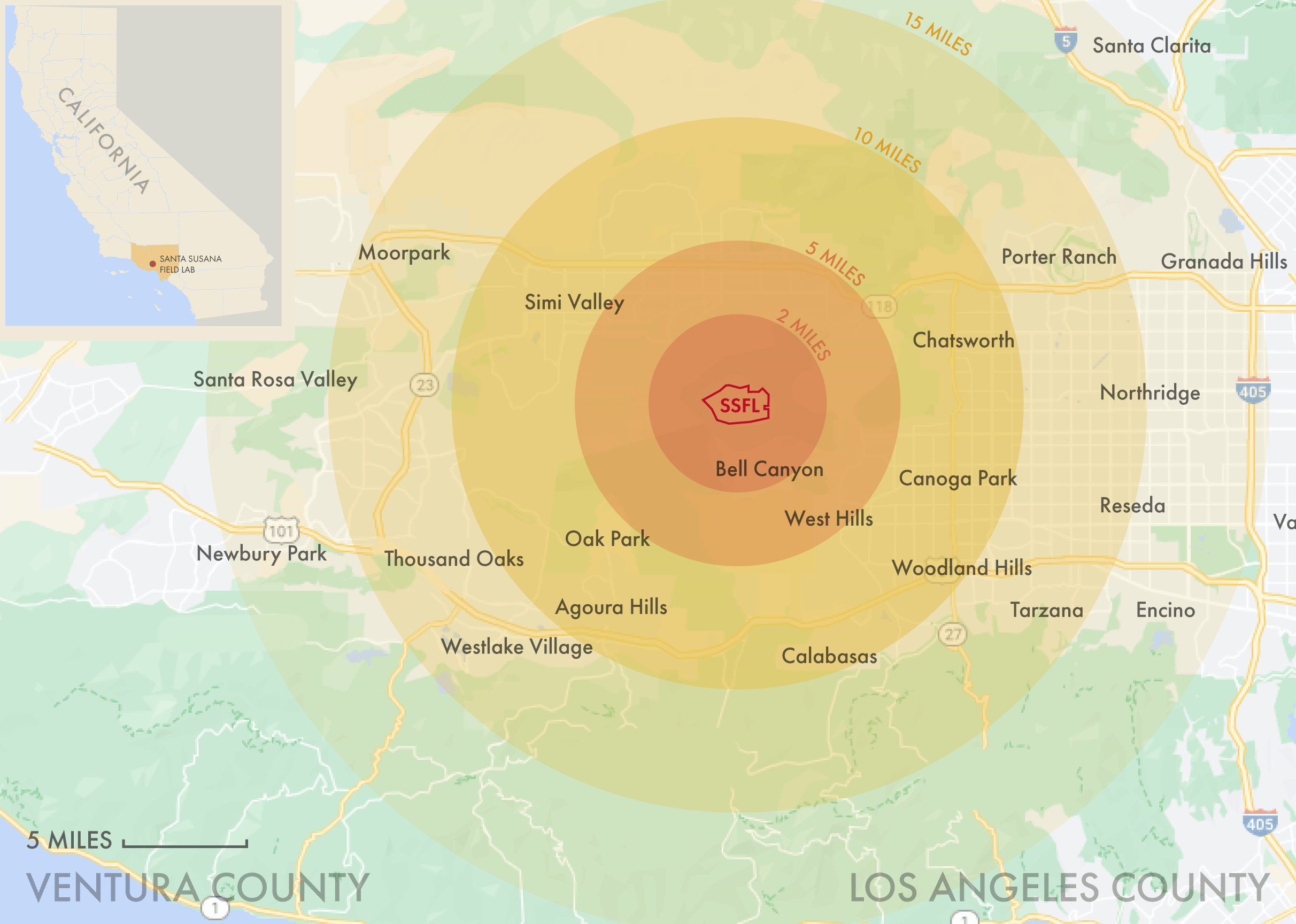
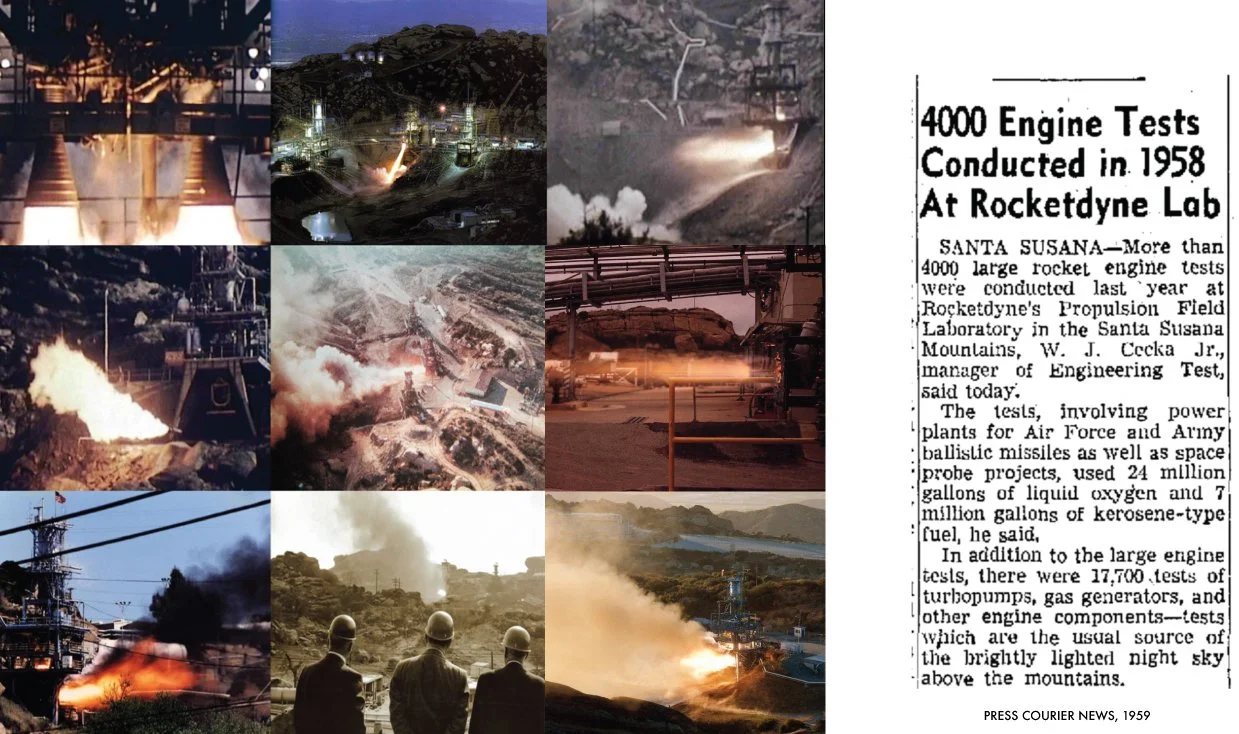
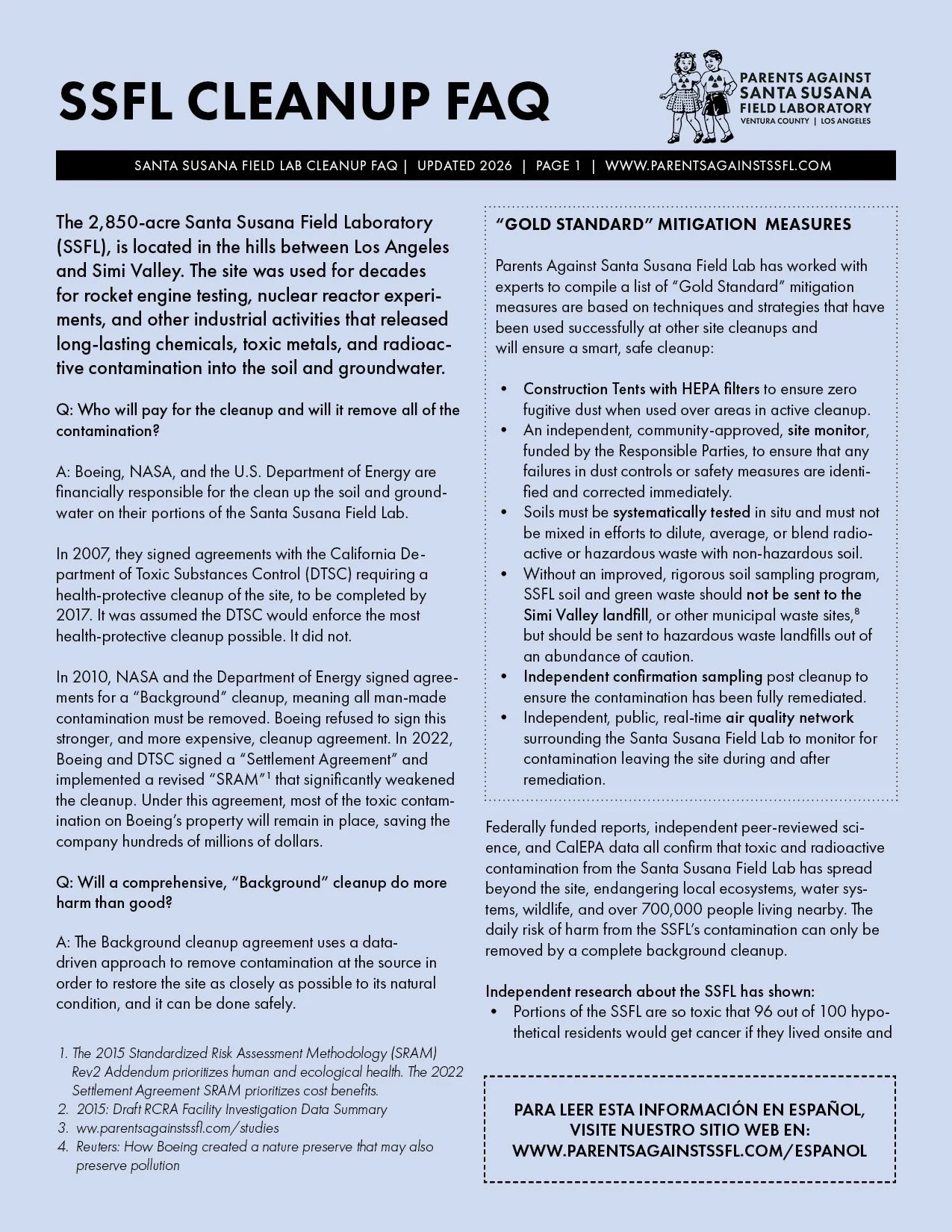
After decades of rocket engine testing, nuclear experiments, and industrial work, the Santa Susana Field Lab (SSFL)’s soil and groundwater are heavily contaminated with long-lasting chemicals, toxic metals, and radionuclides.
Independent research has shown the SSFL contamination migrates offsite, polluting the air and water. Surrounding communities in Ventura County and Los Angeles have increased rates of rare diseases and cancer.
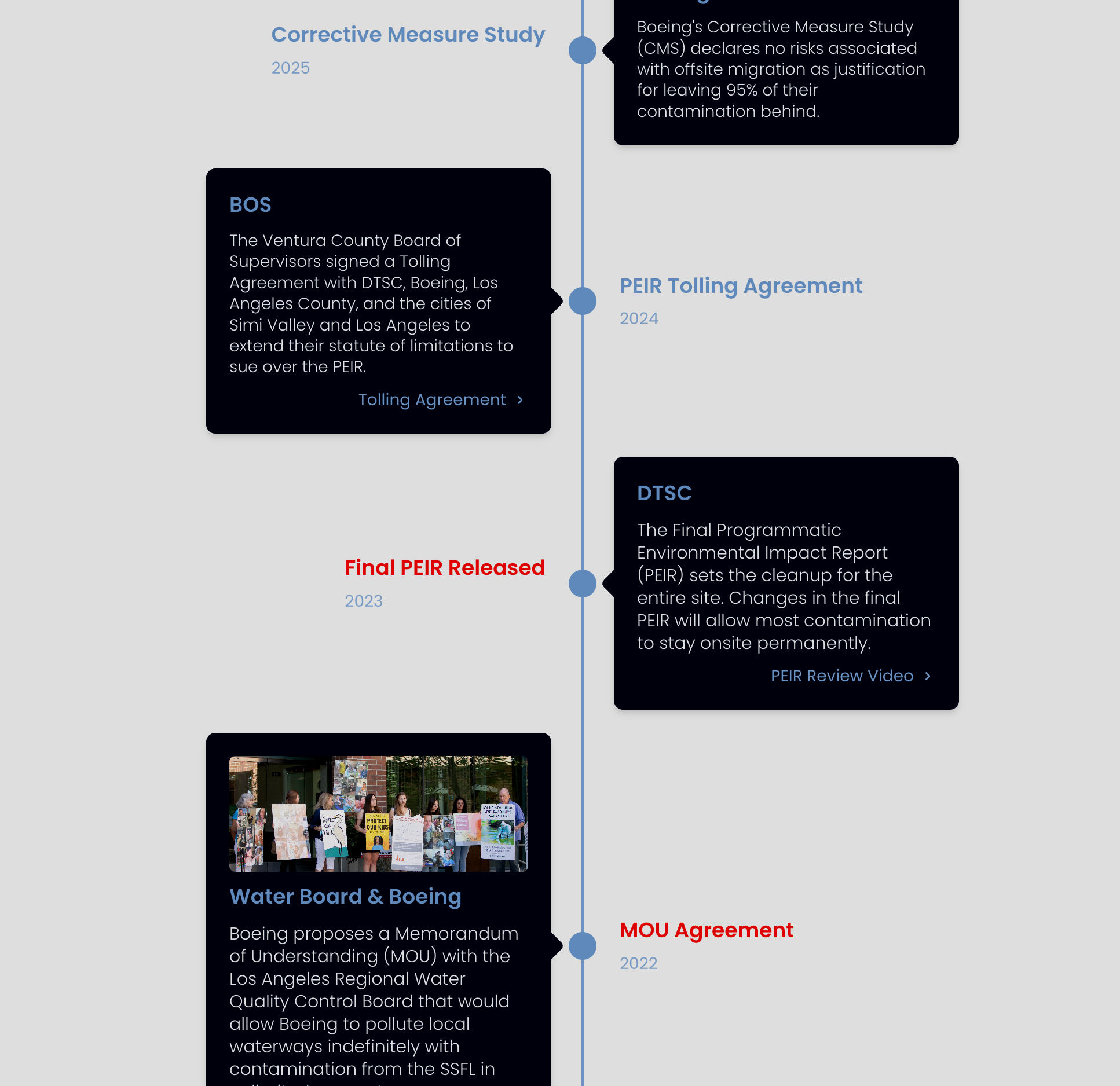
The Boeing Company, who owns 80% of the site, plans to start the cleanup of their portion this summer, leave 95% of their chemical contamination behind in order to save hundreds of millions of dollars, and turn it into a public park.
It will take public outrage and pressure from our elected officials to ensure the cleanup is the safest, smartest, and most comprehensive possible.
96 out of 100 cancer rates

The chart (shown left) is from Boeing’s 2015 RFI Report, PDF page X. The risks are calculated for an “exposure pathway” of a resident living in the studied area, eating the produce they grew there.
The “Systems Test Lab IV” (PDF page 2878) found 96 out of 100 people would get cancer.
The Environmental Effects Lab (PDF page 641) found 30 in 100 people would get cancer.
The Compound A Facility (PDF page 1251) found 10 in 100 people would get cancer.
The Area III Sewage Treatment Plant (PDF page 426) found 1 in 100 people would get cancer.
Note: The cancer risk, 9.6E-01, is shown in “Scientific E notation,” which translates into 96 out of 100 in plain-speak.
In 2015, Boeing conducted an “RFI Report” that included human cancer risk rates for several areas at the SSFL, calculated for hypothetical residents who lived onsite and ate the produce they grew. The results were staggering. One area is so toxic that an estimated 96 out of 100 people would get cancer. That’s an outrageous risk, especially compared to the EPA’s highest goal for Acceptable Excess Cancer Risks of 1 person in 1,000,000.
Though people won’t live on the SSFL in the foreseeable future, that same toxic material responsible for the high cancer rates is migrating into the community, environment, air and water nearby, where it is causing irreparable harm.
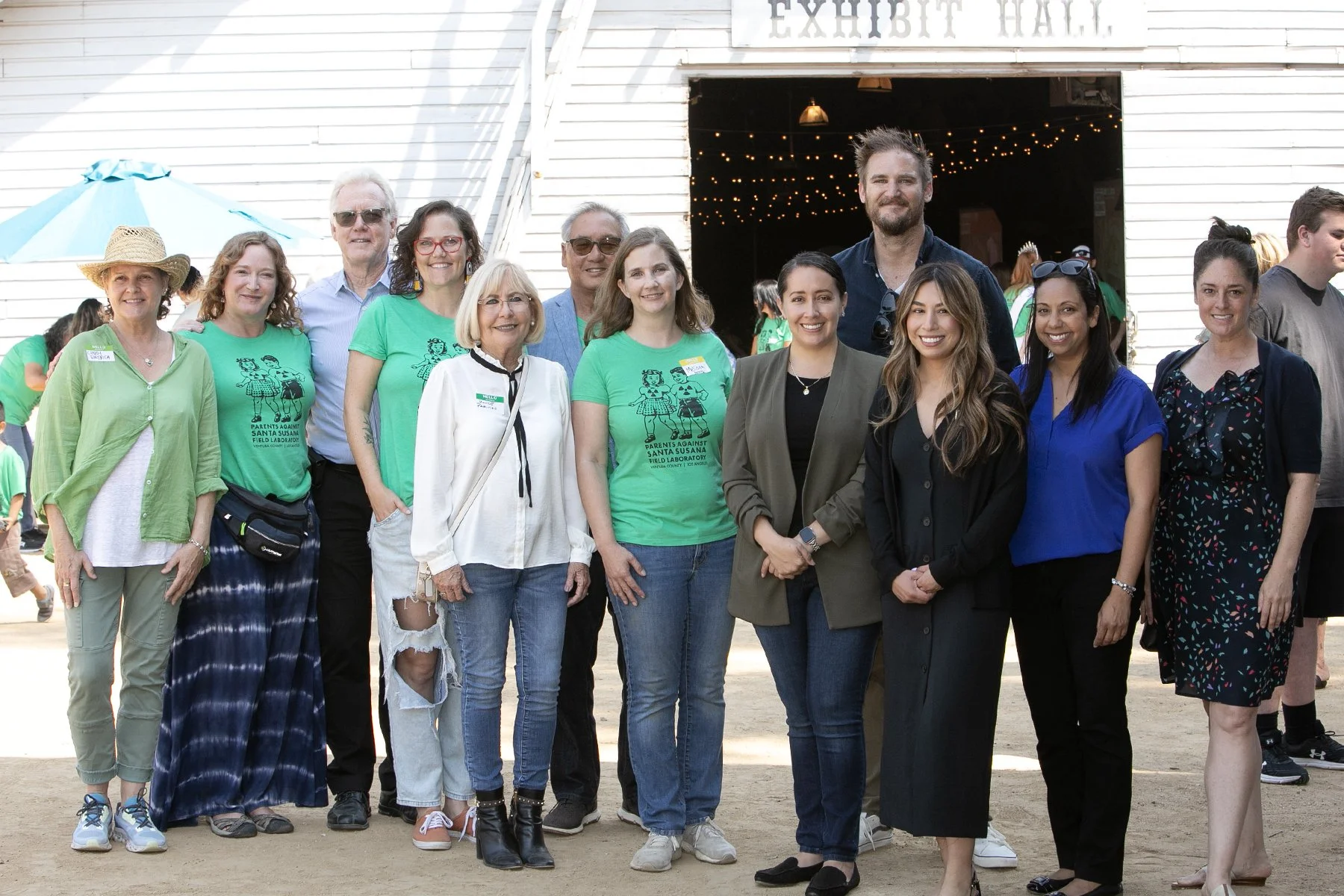
Elected Officials Pressure Campaign
Email, phone, or show up at a meeting to give a public comment. We’ll be with you every step of the way
Get involved
Emails on actions and events
Volunteer
Share the word