
superfunds
Many US Residents have no idea they live near environmental emergencies known as “EPA National Superfund Sites,” toxic military sites, or state designated toxic, hazardous, or radioactive sites.
Some areas have not been identified as dangerous. Some have been intentionally downplayed or covered up.
The theme that unites us all- it’s up to us “regular folks” to ensure our environments, water, air, and soil are safe.
THIS PAGE IS BEING UPDATED REGULARLY, PLEASE CHECK BACK
Identify the problem
Step one to making change is identifying the problem.
Here are resources you can use to search to see if you live near a toxic, hazardous, or radioactive site.
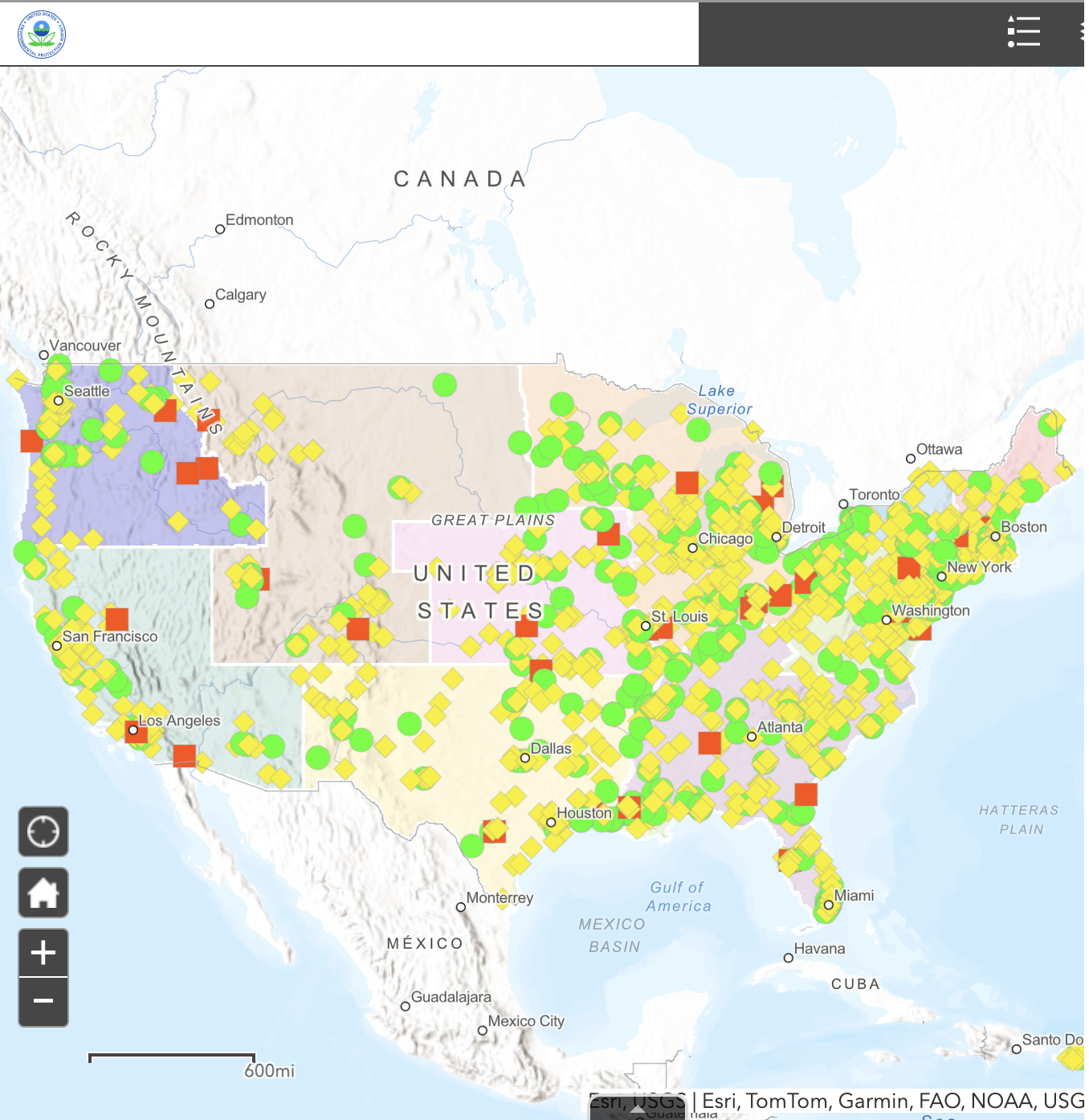
Use the EPA map to find nationally designated sites (please note that just because the site is labeled “closed” or “remediated,” it doesn’t guarantee the area is safe:
Superfund (NPL) sites
Hazardous waste facilities
Toxic Release Inventory (TRI) facilities
Search online with your [state] and the terms “hazardous waste site map” and “environmental cleanup database.” The following may also be toxic:
Brownfields
Closed landfills
Military sites
Industrial sites
If you don’t find any results, you can search for your area’s history or deed records to determine if any industrial sites, military bases, landfills, or other dangers existed there in the past.
Reach out to local universities and professors in the environmental sciences and/or public health departments to ask for help identifying the problem.
Research
Children living near toxic, hazardous, or radioactive sites are like canaries in a mine, bearing the earliest and heaviest impacts of environmental harm they had no role in creating.
Cancer, autoimmune diseases, low birth weights, and asthma are just some of the impacts we see from kids living near toxic, radioactive, and hazardous sites.
“Children metabolize and get sick from environmental poisoning faster… children are more vulnerable because of their greater environmental exposure pound for pound," says Dr. Phil Landrigan, author, epidemiologist, pediatrician and one of the world’s leading advocates of children’s health.
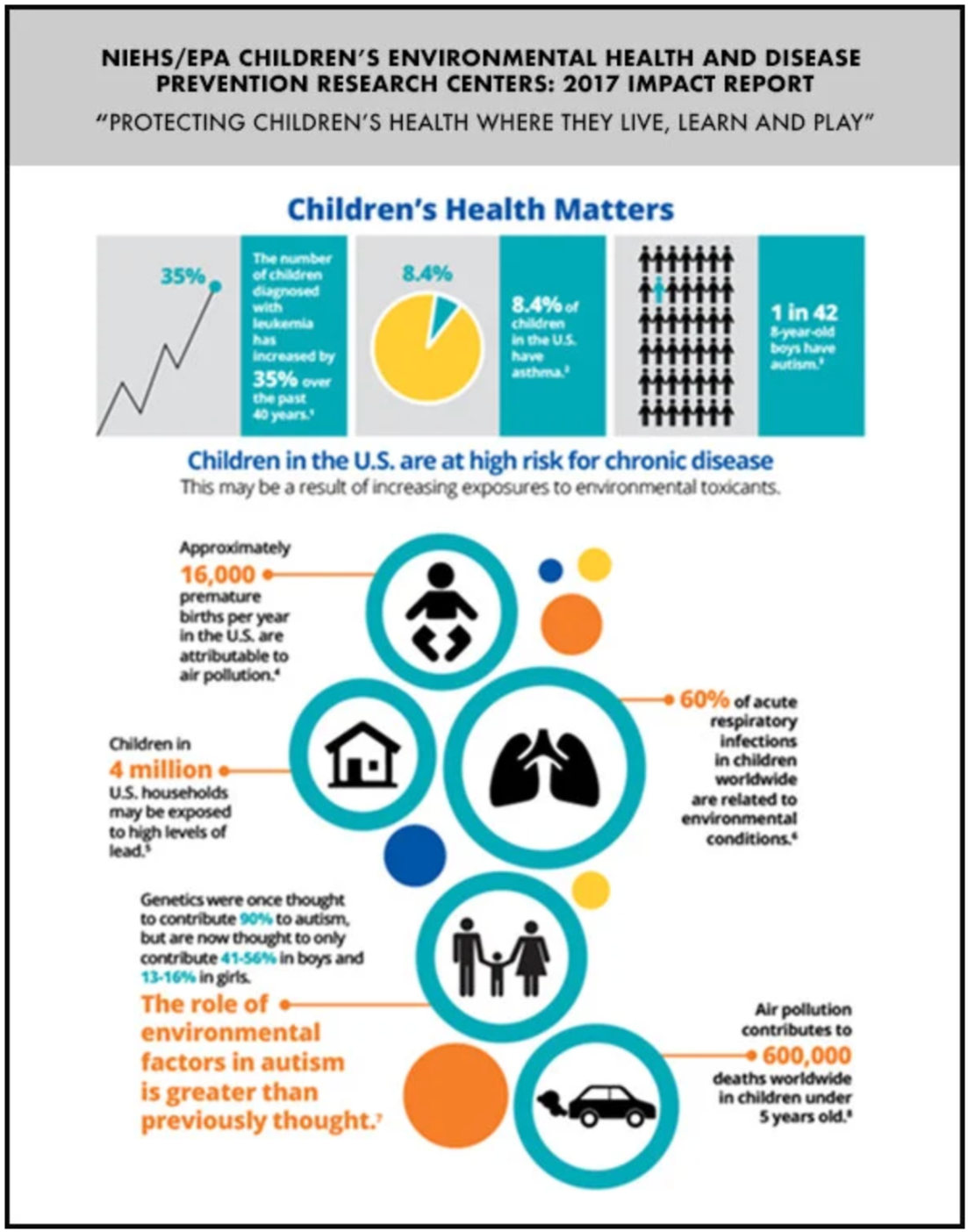
Excerpts from Childhood Cancer Studies
“The rise in leukemia cases over a relatively short time frame points to a role for environmental triggers.” UC Berkeley, 2016
“The true burden of environmentally induced cancer has been grossly underestimated.” President’s Cancer Panel 2008-2009
“Incidence rates of thyroid cancer in children and young adults (age 0-19 years) have nearly doubled over a recent 15-year period in the United States. High-dose exposure to ionizing radiation is the only known non-genetic risk factor...” National Institute of Health, 2020: Birth Characteristics and Risk of Pediatric Thyroid Cancer: A Population-Based Record-Linkage Study in California
“This [rise in pediatric cancer incidence rates] may be a result of increasing exposures to environmental toxicants.” Environmental Protection Agency, 2017: Protecting Children's Health Where They Live, Learn, and Play
“The rise in leukemia cases over a relatively short time frame points to a role for environmental triggers.” UC Berkeley, 2016: With rise of leukemia in children, $6 million grant funds search for causes
“While the mortality due to childhood cancer has been decreasing since the 1970s, overall incidence has increased over the same period.” National Institute for Health, 2016: An overview of disparities in childhood cancer: Report on the Inaugural Symposium on Childhood Cancer Health Disparities
“Exposure to ionizing radiation from nuclear accidents… is associated with an increased risk of childhood leukemia and solid tumors.” The Journal of Pediatric Hematology & Oncology, 2015: Children’s Cancer and Environmental Exposures: Professional Attitudes and Practices
“Opportunities for eliminating or minimizing cancer-causing and cancer-promoting environmental exposures must be acted upon to protect all Americans, but especially children… are at special risk due to their smaller body mass and rapid physical development, both of which magnify their vulnerability to known or suspected carcinogens, including radiation.” The President’s Cancer Report, 2009: Reducing Environmental Cancer Risk, What We Can Do Now:
“Carcinogenesis occurs in three main stages: Initiation of the cancer occurs when an environmental agent such as a chemical, an infection or radiation successfully damages DNA and this damage fails to be repaired.” World Health Organization, 2009: Children's Health and the Environment WHO Training Package for the Health Sector
“By default we are conducting a massive toxicological experiment, and our children are the ‘experimental animals.” National Institute for Health, 2001: Environmental contaminants and children’s health: Cause for concern, time for action:
“1 in 9 cancers among children who reside near nuclear reactors is linked to radioactive emissions. If cancer incidence in 5 western states is used as a baseline, the ratio is closer to 1 in 5. Incidence is particularly elevated for leukemia.” Radiation and Public Health Project, New York: 2003 Elevated childhood cancer incidence proximate to U.S. nuclear power plants
“Findings document that the very young are especially susceptible to adverse effects of radiation exposure, even at relatively low doses.” Radiation and Public Health Project, 2006: A short latency between radiation exposure from nuclear plants and cancer in young children
“The most critical issue when considering the effects of radiation on the health of children was the increase of thyroid cancer, as clearly demonstrated among people who were children or adolescence at the time of the Chernobyl accident.” Department of Pathology and Applied Neurobiology, Kyoto Prefectural University of Medicine, 2012: Radiation hazards in children - lessons from Chernobyl, Three Mile Island and Fukushima
ORGANIZE
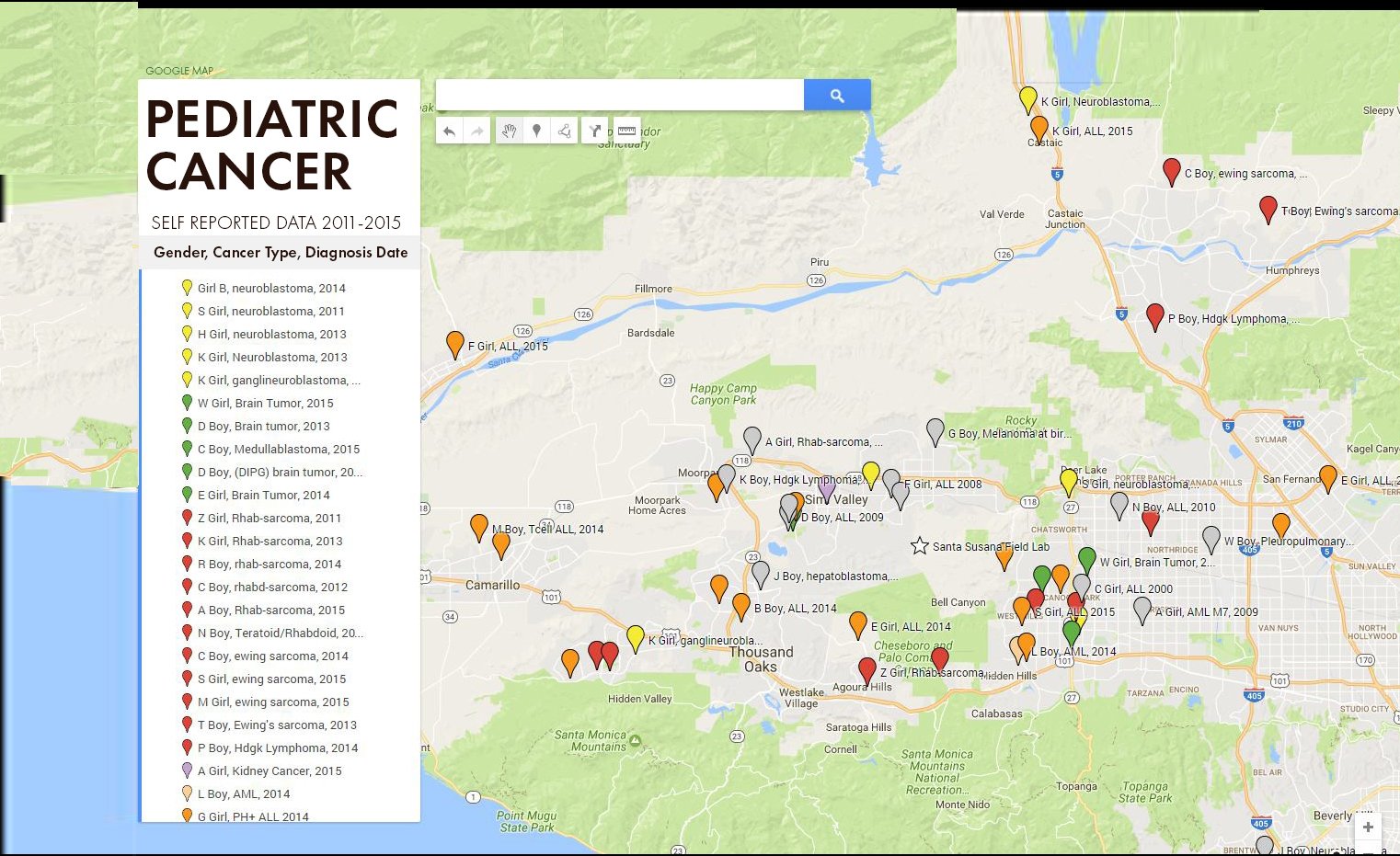
Parents near the Santa Susana Field Lab created a google map of pediatric cancers* to see if there was a correlation between our children’s cancers and the environment. We soon discovered we were all within miles of a toxic and radioactive site that had never been properly cleaned up.
Our steps included:
We used Google Maps to track the childhood cancers in our community - with permission from their families. One person had a secure excel spreadsheet that had the patient’s full name, email address, address, gender, cancer type, diagnosis date, oncologist name. The public map only showed the cancer type, date diagnosed, first initial, gender, and a generalized map within a few miles of their real address for privacy.
We created a Facebook group to connect and share, and later, a website and email list.
We started a change.org petition. Not only did this bring awareness, it opened doors to elected official offices.
We started attending cleanup meetings to learn what the site polluters and the cleanup government agency were saying (spoiler alert: they were lying to us that we were safe).
We organized protests, handed out flyers, wrote letters to editors at our newspaper, and tried to get the word out however we could.
We collaborated with environmental scientists, public health specialists, epidemiologists, toxicologists and ecotoxicologists, water quality scientists, air quality scientists, hazardous waste specialists, and more.
We contacted environmental/health NGOs and non-profits to support our work.
We requested meetings with our elected officials and asked them to advocate on our behalf.
Search for support
Physicians for Social Responsibility - national and local chapters
AN IMPORTANT NOTE ABOUT LAWYERS AND LAWSUITS
Ever since the Erin Brockovich movie, there’s been an assumption that lawsuits equal change. Unfortunately, that’s only true in the movies. Our group vowed to fight for a cleanup and make our priority to protect everyone’s kids, not just our own.
Our community found out the hard way that many “class action” or “personal torte” cases can delay cleanups, silence the community, and provide minimal compensation to hurting families. We found that many lawyers only intend to get “settlement agreements” for their clients and not true justice.
In our community, many people were only compensated for the days they missed work from cancer treatment but still had gag-orders. This allowed the polluters to hide the true damage the Santa Susana Field Lab had caused, delaying the cleanup, and allowed future children to keep getting cancer.
Settlement Agreements (can) provide money but are accompanied by gag-orders that silence people from speaking the truth which can delay or kill a cleanup.
Settlement Agreements don’t clean up the site, they cover up the problem.
Settlement Agreements are relatively easy for lawyers as the cases don’t go to court.
Class Action or Torte cases can take time, energy, and reliving painful memories without any guarantees of fair compensation.