
Lessen exposure Risks

Lessen risks
There are simple but effective steps you can do to lower the risks of harm from the SSFL contamination.
Please note: PASSFL does not give medical or legal advice.
Soil testing
We generally don’t recommend testing your yard for contamination.
The contamination at the SSFL is loose in the soil and groundwater. For most people, if it reaches our homes, it's mostly in the form of particulate matter (dust). That makes it very difficult to track and test for unless you spend tens of thousands of dollars…even then, it can be inconclusive.
The SSFL contamination is very mobile because it’s loose in the soil and groundwater. That's what makes it dangerous - because it can move easily. It can blow into, and out of, your yard during a windy season. That’s why even comprehensive testing can be inconclusive for residents.
We need the cleanup of the contamination at the source so it doesn’t continue to migrate into our communities. That’s why PASSFL is fighting for the safest, smartest, most complete “Background” cleanup of the site.
Lessen your risks
The following suggestions are simple but effective.

Wash your hands
This advice is so simple it can be overlooked as one of the most impactful ways to protect your family from contamination. Ingesting toxic or radioactive contamination is one of the most dangerous pathways of exposure. By thoroughly washing your hands before snacks and meals (especially after playtime outside) you limit the risk of accidentally ingesting contamination.
Don’t track in dirt
Again, this is another simple but incredibly important tip to reduce your exposure from the SSFL’s contamination. Especially if you have spent time outdoors, consider leaving your shoes outside, carefully wiping your feet before coming indoors, or sweeping your floors often. This may be even more important if you have a baby or toddler as these little humans spend so much of their time on the floor.
Consider your drinking water
Golden State Water (GSW) provides the drinking water to approximately 30% of Simi Valley Residents and uses anywhere from 10-70% well water mixed with imported water.
Though GSW meets the federal safe drinking water act, GSW does not used the most proactive testing methods nor the most protective measures to guarantee the well water they use is completely free of SSFL contamiantion.
According to a GSW representative, they have only tested for tritium (radioactive water that can’t be removed with any filtration system) twice in twelve years. And though the meet the legal maximum contamination limit for perchlorate, it’s still four times above the California Health Goal for perchlorate.
Many GSW customers have told Parents Against SSFL they feel safer purchasing water through a supplier like Sparklets for their drinking and cooking water. Others have installed water filtration systems. While reverse-osmosis water filtration can remove perchlorate and other contaminants, there are no filtration systems that can remove tritium.
All other Ventura County and Los Angeles County residents (who do not use Golden State Water) have imported water that has no known potential of being contaminated from the Santa Susana Field Lab.
Avoid SSFL Wildfire Smoke and ash
After the results of the Woolsey Fire, which burned across the SSFL, avoid exposure to any future smoke from SSFL wildfires at any cost. If you are unable to leave during a smoke event, close all windows and doors, use air filters, and boil water (the humidity catches dust particles and weighs them down to surfaces you can then clean). You should also wear a N95 mask when outdoors until all smoke and ash have blown away.
Consider where you live
One of the questions we get asked the most is, is it safe to live here? We can’t tell you where it’s “safe” but we can tell you the facts so you can decide weigh the pros and cons to decide what’s best for your family.
The SSFL is in the mountains and it can be hard to see exactly how close you live. The SSFL is 2,850 acres and contamination happened in different locations across the site, so this is meant to be an estimation. You can see how far you’re from the SSFL here.
Cancer rates decrease with distance
According to a federally-funded, independent epidemiological study by Dr. Hal Morgenstern, people living within two miles of the SSFL have a 60% higher cancer incidence rate compared to those living at 5 miles. This means that the closer you live to the SSFL, the higher the risks of being impacted by contamination. However, there isn’t a giant glass wall keeping the contamination at the two mile point. Generally we recommend living as far from the SSFL as you reasonably can.
beware The canyons
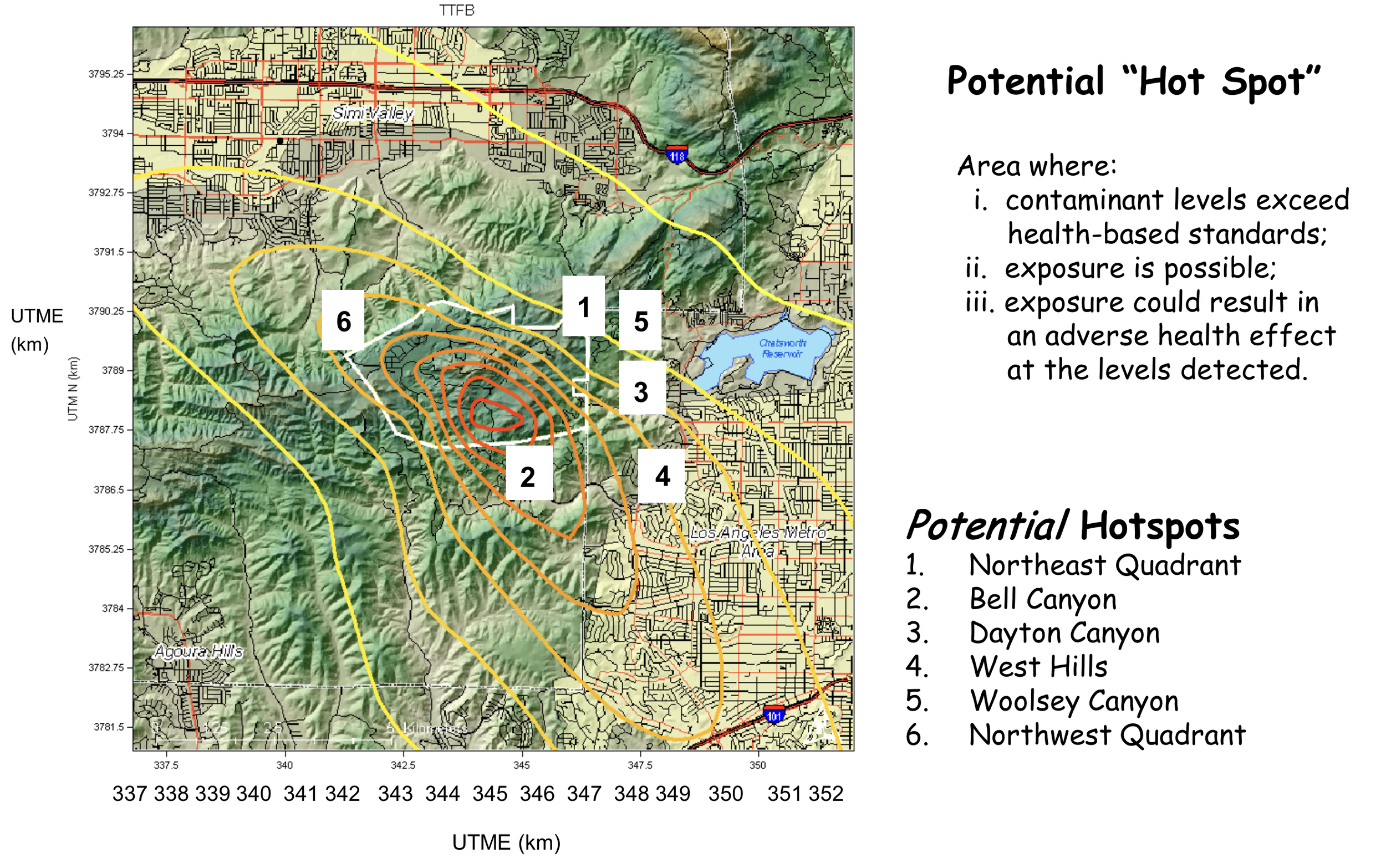
Runkle Canyon, Bell Canyon, and Dayton Canyon are all near to the Santa Susana Field Lab and channel rain runoff. All three areas have residents with apparent elevated rates of cancer. Still the DTSC continues to say the areas are safe, though evidence shows the risks are increased for people in these areas.
Learn about offsite areas at risk >
Where you recreate
PASSFL suggest avoiding the following to lower your risks of exposure:
Boeing’s Earth Day Hikes at Santa Susana Field Lab
Chatsworth Reservoir Hikes
Sage Ranch Park- hiking or camping
Orcutt Ranch orange consumption
Camp Alonim at Brandeis-Bardin