LA CLimate week 2026
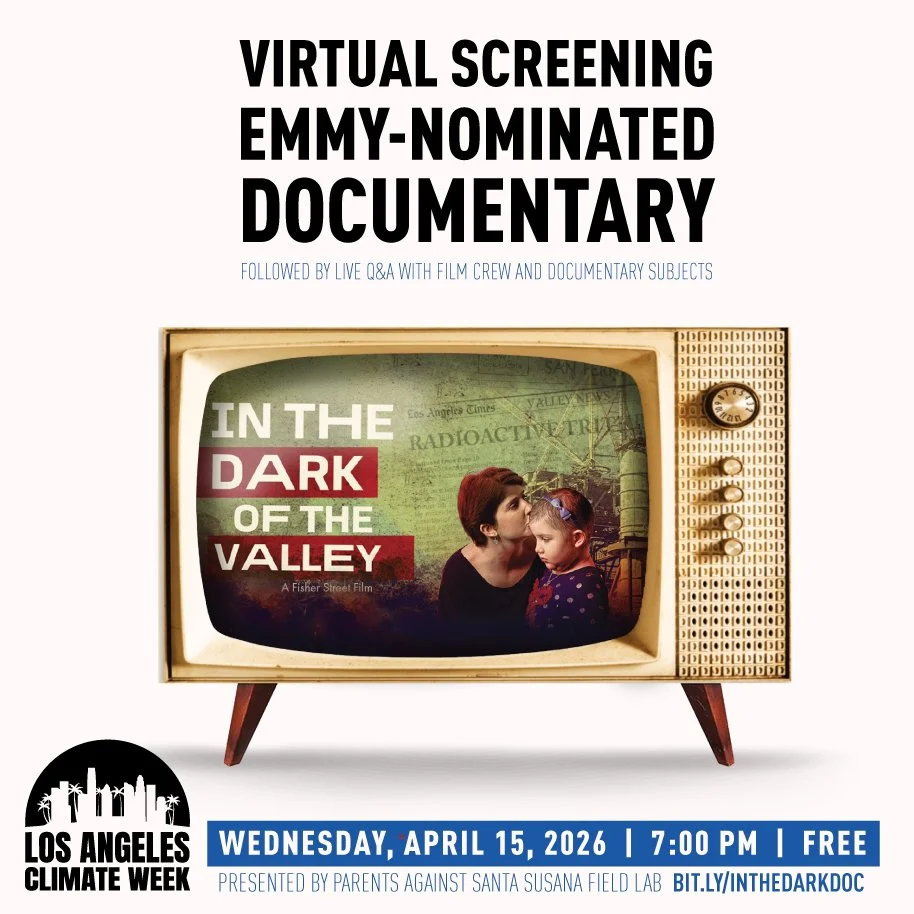
OFFICIAL EVENTSCREENING & LIVE QA
Wednesday, April 15, 2026
7:00 pm
FREE
TRAILER
A Southern California mother discovers that the Santa Susana Field Lab, the site of one of the largest nuclear accidents in U.S. history, is located only 7 miles from her home. Concealed from the public eye for 20 years and never fully cleaned up, she grapples with the idea that the site may be responsible for exposing her daughter and community to cancer-causing radioactive waste.

Climate CHANGE & TOXIc ENVIORnmentS
Climate change is intensifying extreme weather events, creating new and urgent challenges in protecting communities and ecosystems from toxic, hazardous, and radioactive contamination—especially at sites not designed to withstand these conditions.
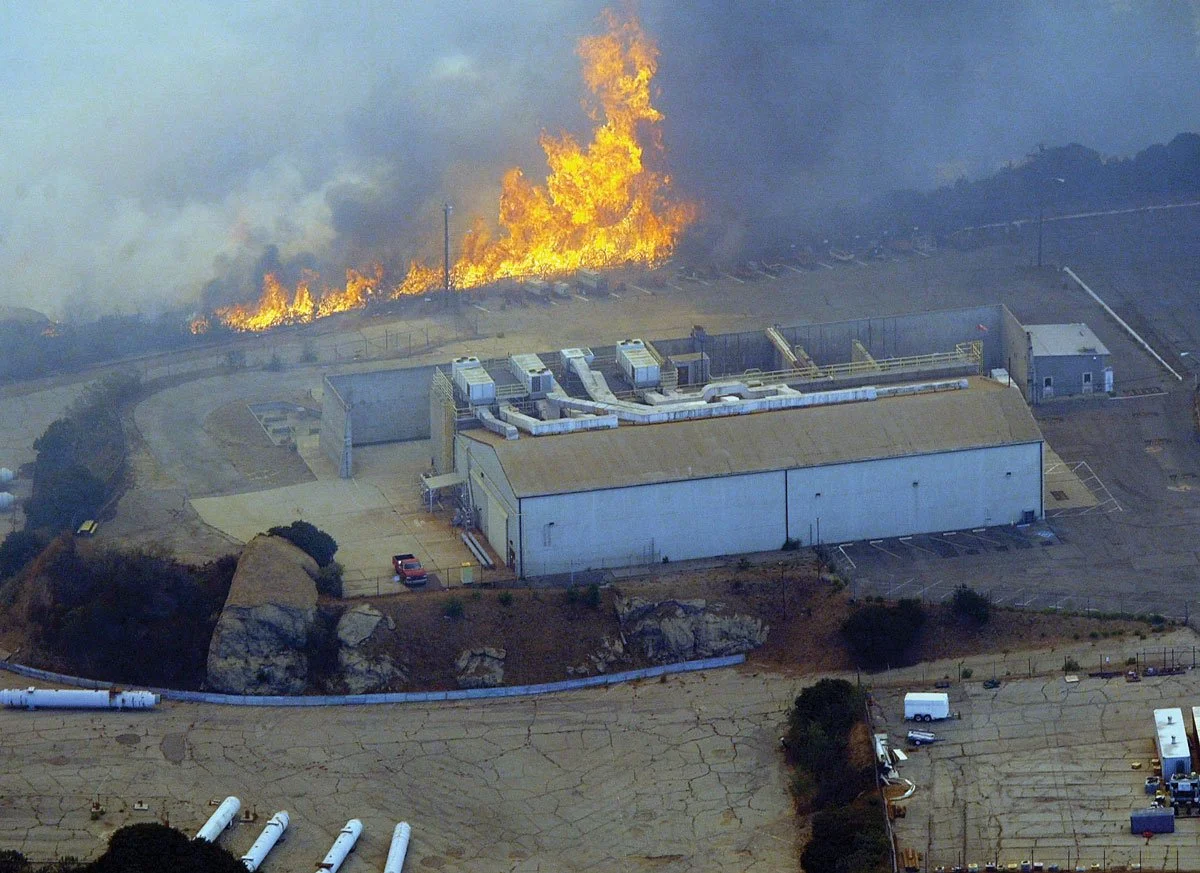
Events like the 2018 Woolsey Fire, which began at the Santa Susana Field Lab, demonstrate these risks. Fueled by extreme winds, the fire carried toxic and radioactive particles through ash and smoke into surrounding communities. This threat is not isolated. Rising sea levels are placing coastal nuclear waste sites at risk, while extreme weather can mobilize contamination from legacy industrial sites into the air, soil, and water.
PASSFL, in partnership with environmental justice communities and coalitions, is working to prevent the spread of toxic contamination driven by climate change. This includes advancing policy and agency reform, advocating for complete cleanups of contaminated sites, and working to limit the creation of new waste.